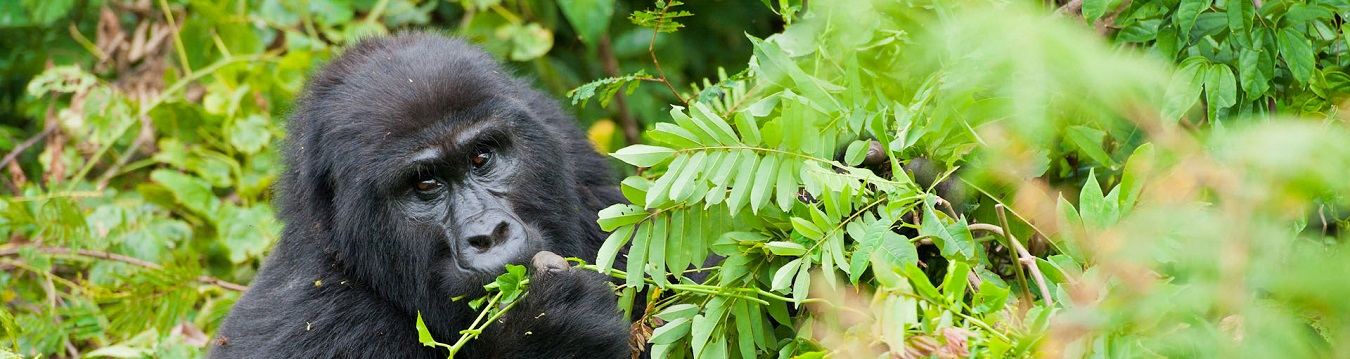
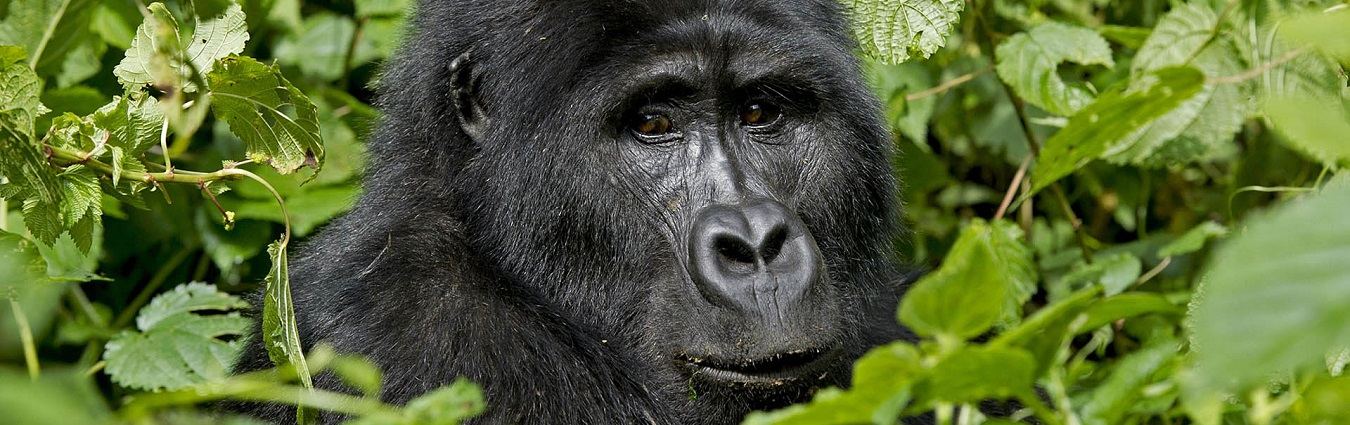
A gorilla trek is a guided walk through the rainforest to find one habituated gorilla family. Habituated gorillas are used to people, so they carry on feeding, playing and resting while you watch. Once your group reaches them, you spend one unforgettable hour in their company. After that, you walk back out with the rangers.
Your trekking day, step by step
- Morning briefing. First, you report to the park office in your trekking sector early in the morning. Rangers explain the rules and then assign each group to a gorilla family.
- The trek. Next, you follow the rangers and trackers into the forest. The walk can take anything from under an hour to most of the day, because the gorillas move every day.
- One hour with the gorillas. When you find the family, you leave your bags behind and move closer quietly. You then have one hour to watch and photograph them.
- The return. Finally, you hike back to the trailhead, tired but happy after a once-in-a-lifetime morning.
Porters and walking sticks
Local porters wait at the trailheads. For a fee, a porter carries your daypack and helps you up steep, muddy slopes. Hiring one also supports families who live next to the park. Walking sticks are usually offered at the start too, so you rarely need to bring your own.
Where to Go Gorilla Trekking in Uganda
Uganda has two gorilla parks. Both lie close to the Rwanda and DR Congo borders, so you can easily combine them with other countries.
Bwindi Impenetrable National Park
Bwindi Impenetrable National Park is a UNESCO World Heritage Site and the heart of gorilla tourism in Uganda. Its steep, forested ridges hold most of the country’s mountain gorillas. In addition, the park is split into four trekking sectors: Buhoma in the north, Ruhija in the east, and Rushaga and Nkuringo in the south. Each sector has its own habituated families, and your permit is booked for one sector. We choose the sector that fits your route, your fitness and your lodge.
Mgahinga Gorilla National Park
Mgahinga Gorilla National Park is the smallest national park in Uganda. It covers the Ugandan slopes of three Virunga volcanoes: Muhabura, Gahinga and Sabyinyo. Here, trekking feels quieter because far fewer permits are available. Besides gorillas, Mgahinga is the best place in Uganda to track golden monkeys. You can also walk the Batwa Trail with members of the Batwa community, the forest’s original people.
Gorilla Permits and Booking
Every trekker needs a gorilla permit from the Uganda Wildlife Authority. Each permit is valid for one trek, on one date, in one sector. Because each family receives only a small group of visitors per day, permits are limited. They often sell out in the busy months. So, we recommend that you book several months ahead, especially for June to September and December to February.
Permit prices are set by the Uganda Wildlife Authority and change from time to time. For that reason, we do not quote a fixed price here. Instead, Roots will confirm the current rate when you enquire, and we secure your permit before we finalise your safari. Our guide to Uganda gorilla permits explains the booking steps in more detail.
The gorilla habituation experience
Would you like more time with the gorillas? The gorilla habituation experience lets you spend up to four hours with a family that is still getting used to people. It takes place in southern Bwindi, and permits are even more limited than standard ones. As a result, it suits keen photographers and anyone who wants a deeper, slower encounter.
Best Time for Gorilla Trekking in Uganda
You can go gorilla trekking all year round. However, the dry seasons from June to September and from December to February are the most popular. Trails are firmer then, so hiking is easier. On the other hand, the wetter months of March to May and October to November bring lush forest and fewer visitors. Rain usually falls in short, heavy showers, and treks still go ahead. For a month-by-month view, read our page on when to plan your gorilla trek.
Fitness, Rules and What to Pack
You do not need to be an athlete. Still, a fair level of fitness makes the day far more enjoyable, because the trails are steep, muddy and at altitude. Before your trip, regular walks on hills will help a lot.
Key gorilla trekking rules
- You must be at least 15 years old to trek.
- Keep a distance of at least 7 metres from the gorillas.
- Do not trek if you have a cold, flu or other illness, because gorillas can catch human diseases.
- Keep your voice low and never use flash photography.
- Your visit with the gorillas lasts one hour.
Our page on trekking rules and fitness tips explains each rule and why it matters.
What to pack for your trek
Pack light but smart. Bring waterproof hiking boots, a rain jacket, long trousers, a long-sleeved shirt and gardening gloves for grabbing vines. Also carry drinking water, snacks, insect repellent and a camera with spare batteries. Our full gorilla safari packing list covers everything in one place.
Choose Your Uganda Gorilla Safari Style
Every gorilla safari we plan is tailor-made. So, start with the style that suits you, and we will build the route around it.
Beyond the Gorillas: More of Uganda
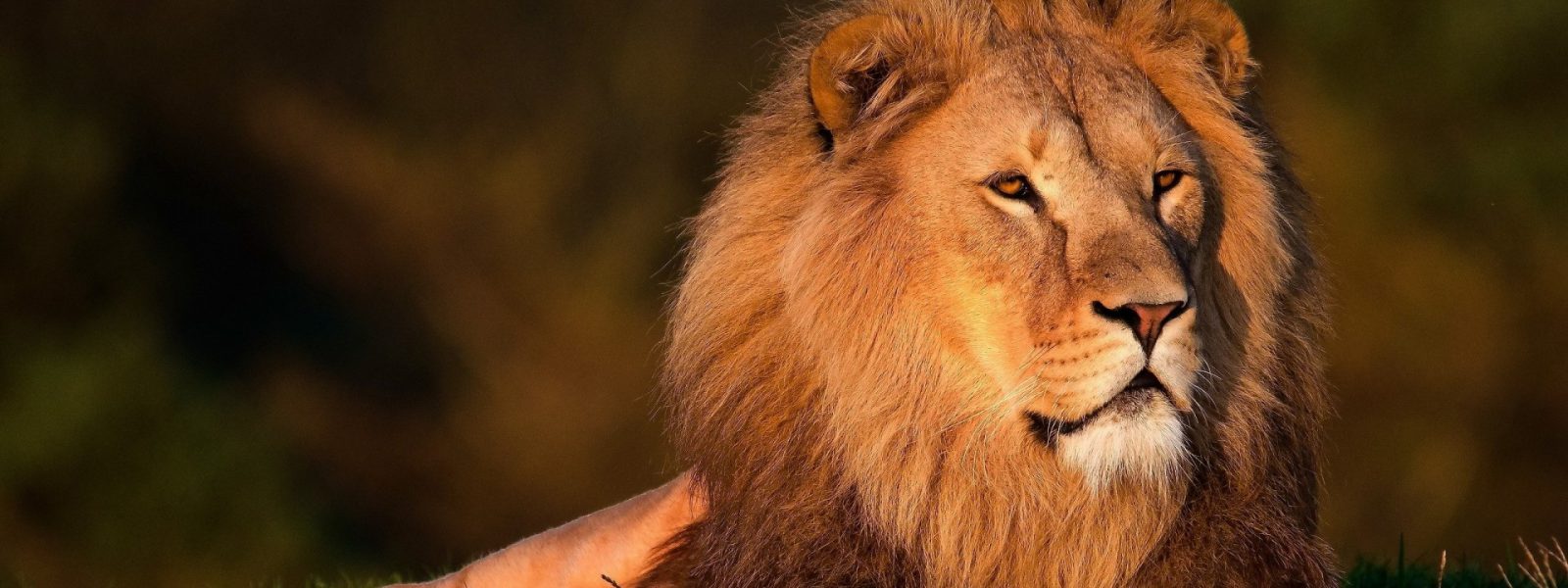
Gorillas are only the start. Winston Churchill called Uganda the Pearl of Africa, and it is easy to see why. More than 1,000 bird species have been recorded here, including the prehistoric-looking shoebill. Meanwhile, Queen Elizabeth National Park is famous for the tree-climbing lions of Ishasha, and remote Kidepo Valley is home to cheetahs. You can also hike the Rwenzori Mountains or Mount Elgon, or meet some of the country’s more than 50 cultures. See our full list of activities across Uganda for ideas.
Why Plan Your Gorilla Trek with Roots
Roots Tours & Travel is a Kampala-based tour operator and a member of the Association of Uganda Tour Operators (AUTO). We plan tailor-made gorilla trekking and wildlife safaris in Uganda, Rwanda and DR Congo. That means we take care of the permits, the route and the timing, so you can focus on the experience. Tell us your dates, budget and interests, and we will send you a free itinerary for gorilla trekking in Uganda.