Tsavo National Parks
Home » Destinations » Kenya » Tsavo National Parks
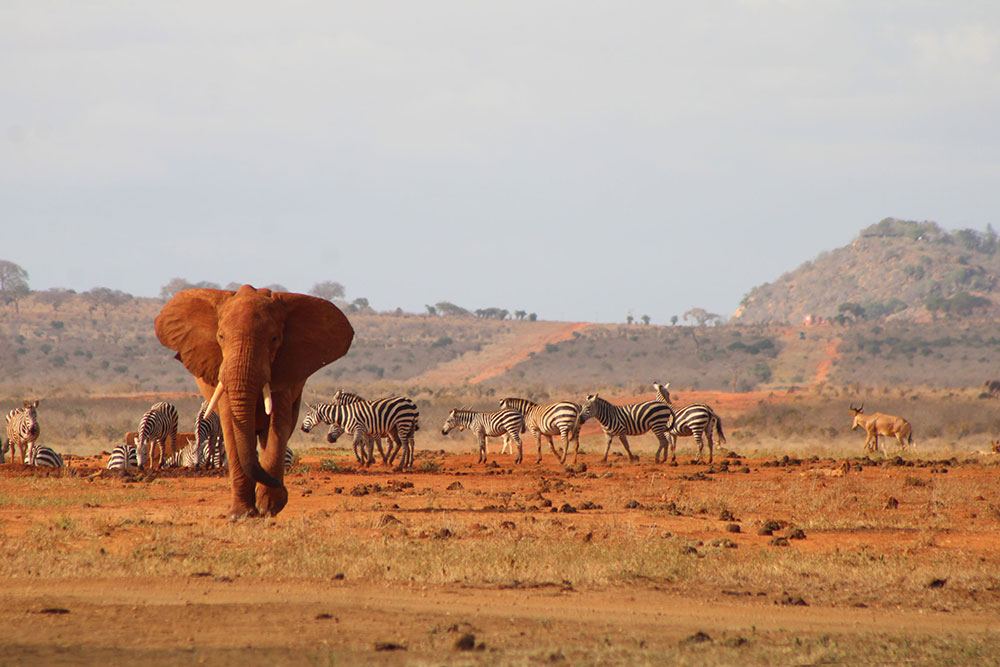
Tsavo National Park is big. It is bigger than many countries, bigger than any other protected area in Kenya, and big enough to drive for hours without seeing another vehicle. Here, elephants coated in red earth march across golden plains. Lions rest in the shade of baobab trees, and rivers carve through ancient lava. On a clear morning, the snows of Kilimanjaro even float on the horizon.
In fact, Tsavo is two parks, Tsavo East and Tsavo West, divided by the Nairobi–Mombasa highway and railway. Together they cover around 22,800 square kilometres, roughly 4% of Kenya’s land area. They form the heart of the wider Tsavo Conservation Area, which is home to Kenya’s largest elephant population.
Tsavo is also one of the easiest parks in Kenya to combine with a beach holiday. Because it lies between Nairobi and the Indian Ocean coast, you can reach it in just a few hours from Mombasa, Diani or Watamu. So it is the perfect safari if you want to swap the sand for the savannah for a few days.
Tsavo East vs Tsavo West
The two halves of the Tsavo National Park area feel very different, so many travellers visit both.
Tsavo East
Tsavo East is a land of vast, open plains and big herds. It is famous for its “red elephants”, which dust themselves with the region’s red soil. Highlights include Lugard Falls, where the Galana River rushes through rocky channels, and Mudanda Rock, a long outcrop above a seasonal waterhole. The Yatta Plateau, one of the world’s longest lava flows, runs along the park’s western edge.
Tsavo West
Tsavo West, on the other hand, is a dramatic landscape of volcanic hills, springs and lava flows. Its best-known sight is Mzima Springs, where crystal-clear water bubbles up from beneath the Chyulu Hills. You can also explore the Shetani lava flow and the Ngulia Rhino Sanctuary. On clear days, the views stretch towards Kilimanjaro.
History of Tsavo National Park
Early peoples and the man-eaters of Tsavo
For centuries, the Tsavo region was home to communities such as the Kamba, the Taita, the Orma and the Waata (Waliangulu). The Waata were famed as skilled elephant hunters who used powerful longbows. Meanwhile, traders’ caravans crossed the dry plains between the coast and the interior. The harsh, waterless country gave the area a fearsome reputation. Indeed, the name Tsavo is often said to mean “place of slaughter”, recalling the raids and battles of the past.
In 1898, British engineers were building the Uganda Railway from Mombasa to Lake Victoria, and they needed to bridge the Tsavo River. Over nine months, two maneless male lions attacked the construction camps at night. They dragged workers from their tents and brought the project to a halt. Lieutenant-Colonel John Henry Patterson, the engineer in charge, finally shot both lions late in 1898. He later claimed they had killed 135 people. However, modern scientific studies of the lions’ remains suggest a lower figure, perhaps around 30 to 35. The lions are now displayed at the Field Museum in Chicago, and their story inspired the film The Ghost and the Darkness.
Founding, poaching and recovery
The park was established in 1948 and soon divided into Tsavo East and Tsavo West for easier management. Famous wardens such as David Sheldrick shaped the early years of Tsavo East. Later, Daphne Sheldrick founded the elephant orphanage that still rescues orphaned elephants, some of which return to Tsavo.
During the 1970s and 1980s, ivory poaching devastated Tsavo’s elephants. Numbers fell from tens of thousands to just a few thousand, and black rhinos almost disappeared. Since then, strong protection by the Kenya Wildlife Service and its partners has helped. Together with the international ban on the ivory trade, it has allowed the elephants to recover steadily. Black rhinos are now protected in the fenced Ngulia Rhino Sanctuary. In addition, the critically endangered hirola antelope has been introduced to Tsavo East to secure its future.
Wildlife in Tsavo National Park
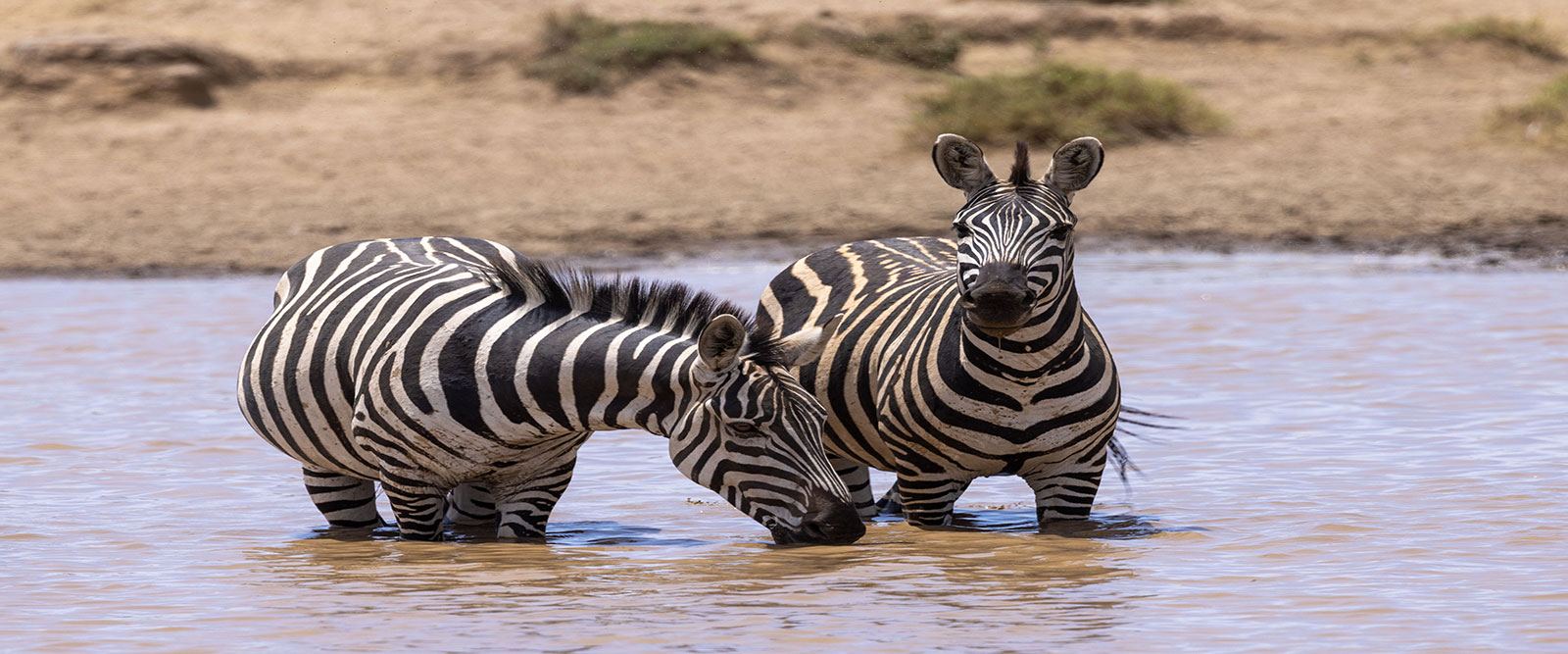
Elephants are the main attraction, and you often see large family herds at waterholes and rivers. Lions, leopards and cheetahs also live here, along with buffaloes, giraffes, zebras and hippos. Moreover, Tsavo is home to dry-country species such as the lesser kudu, gerenuk and fringe-eared oryx. Birdlife is excellent too, with hornbills, weavers, starlings and many birds of prey.
Because the parks are so large and the bush can be thick, sightings feel earned rather than staged. As a result, a good guide makes a real difference here.
Things to do in Tsavo National Park
Game drives
Game drives are the main activity in both parks. Tsavo East’s open plains are ideal for spotting elephants, lions and cheetahs. Meanwhile, Tsavo West’s varied terrain rewards patient searching with leopards, rhinos and spectacular scenery.
Mzima Springs walk and underwater viewing
Walk the nature trail around the springs. Then watch hippos and fish from the underwater observation chamber, a unique experience in Kenya.
Night game drives
Night drives on private conservancies bordering the parks offer the chance to see nocturnal animals. Look out for genets, bush babies, aardvarks and leopards.
Combine with the beach or Amboseli
End your safari on the white sands of Diani, Watamu or Mombasa. Alternatively, continue from Tsavo West to Amboseli for close-up views of elephants beneath Kilimanjaro.
Best time to visit Tsavo National Park
Tsavo is open year-round. Generally, it is hot and dry, with daytime temperatures often around 27°C to 33°C. The main difference between seasons is rainfall.
- June to October and January to February (dry seasons): the best time for elephants and big game, as animals gather at rivers and waterholes.
- March to May and November to December (rains): green landscapes, dramatic skies and migrant birds. Consequently, this is a rewarding time for birders and photographers.
How to get to Tsavo National Park
From the coast, Tsavo East’s Voi and Buchuma gates are about 2.5 to 3 hours’ drive from Mombasa on the Nairobi–Mombasa highway. From Diani and Watamu, allow around 3 to 4 hours. That is why Tsavo is the most popular safari for travellers staying on the coast.
From Nairobi, Tsavo West’s Mtito Andei Gate is about 240 km away, a drive of around four hours. Voi, by contrast, is about 330 km away. You can also reach Tsavo West from Amboseli via the Chyulu Hills.
Plan your Tsavo safari with Roots
Tsavo works well as a short coast safari or as part of a longer Kenya trip. For instance, you can add it to our 6 Days Magical Kenya Safari, which already includes Amboseli. You can also combine it with the big cats of the Maasai Mara, or with a Kilimanjaro climb across the border.
To compare more parks, see our guide to Kenya’s national parks and reserves. Then tell us your dates, and we will send you a free, tailor-made itinerary.
Not sure where to start? Chat with our safari specialists. We’ll help you find the perfect adventure.Every great journey begins with a conversation. Let’s plan yours.
Contact Us
- info@tourwithroots.com
- +256 776 83 1722
- +256 200 905 219
- Universal Apartments, Spine Road - Naalya - Kampala(U)