Community & Cultural Tours
Home » Things to do » Community & Cultural Tours
Community & Cultural Tours in Uganda and Rwanda
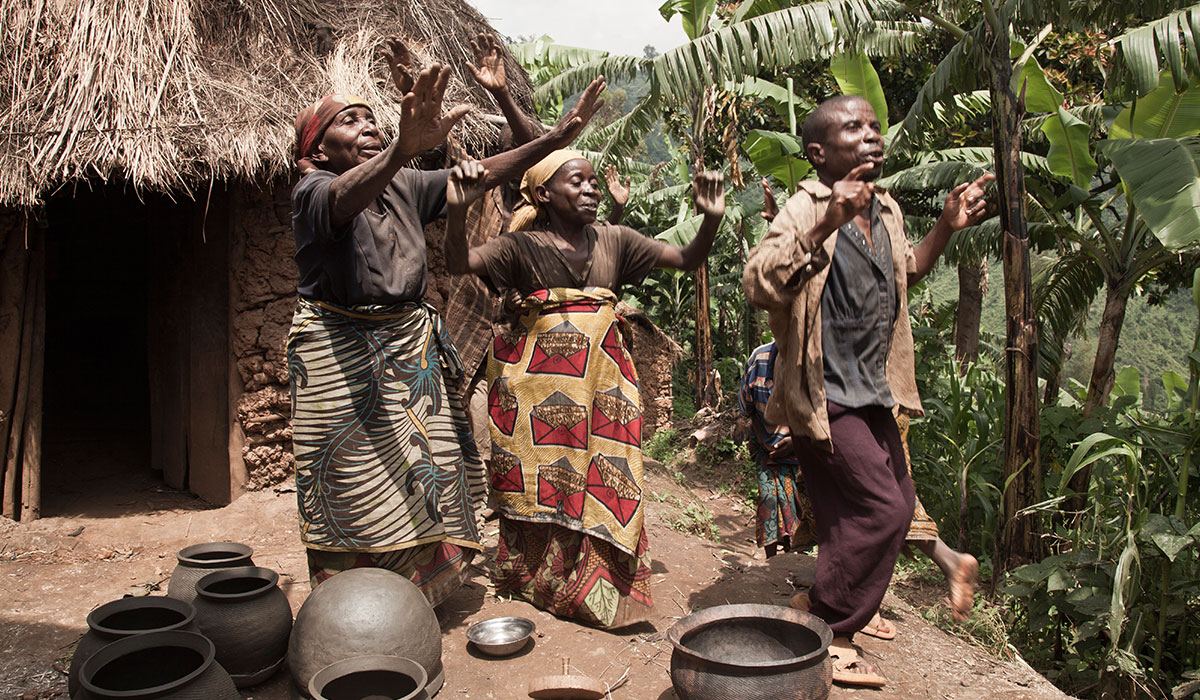
Most people come to Uganda for the gorillas and leave talking about the people. For example, a chat with a Batwa elder outside Bwindi can stay with you as long as the wildlife does. So can a banana beer tasting in a village kitchen, or children singing as your vehicle passes. Our community tours in Uganda make room for those moments on purpose. In other words, you don’t watch from a distance. Instead, you sit down, ask questions and take part, guided by the people whose home it is.
We plan these experiences as half-day add-ons to a gorilla or wildlife safari, or as the focus of a longer trip. Either way, they’re run with local community groups, and the fees go to the families and projects you meet. Most visits sit on the edge of parks managed by the Uganda Wildlife Authority, so they slot neatly between game drives and treks.
Cultural Experiences Near Bwindi and Mgahinga
The Batwa Experience: The Forest’s First People
The Batwa lived as hunter-gatherers in the forests of south-western Uganda for thousands of years. When Bwindi and Mgahinga became national parks in 1991, they were moved out of the forest and had to build a new life on its edges. Today Batwa guides lead visitors on walks that show how their ancestors lived: finding medicinal plants, lighting fire without matches, building shelters and hunting with bows. In Mgahinga, the Batwa Trail ends at Garama Cave, where the community once sheltered, with songs performed inside. It’s an honest, sometimes moving experience, and a direct source of income for a community that lost its home.
Lake Bunyonyi and the Bakiga Highlands
Lake Bunyonyi sits among steep terraced hills farmed by the Bakiga people. Paddle a dugout canoe between the islands with a local boatman, visit a homestead on the shore and hear the story of Akampene, or Punishment Island, where unmarried pregnant girls were once left as a punishment. It’s a sobering stop that local guides explain with care. Many of our gorilla itineraries include a night or two here because it’s the perfect place to rest after trekking.
Buhoma Village Walk
Before or after your gorilla trek in northern Bwindi, spend two or three hours walking through Buhoma with a local guide. Depending on the day, you might meet a traditional healer and learn which plants treat which illnesses, watch bananas being turned into juice, beer and a strong local gin, see a basket weaver at work and visit a primary school. The walk is easy, mostly on village paths, and a good way to stretch tired legs after a long trek.
Community Tours Around Kibale and Queen Elizabeth
Bigodi Wetland Sanctuary Walk
Just outside Kibale Forest, the Bigodi Wetland Sanctuary is managed by a local association, KAFRED. Its income has helped build a secondary school and support other village projects. The guided walk follows a boardwalk through papyrus swamp and is known for primates and birds, including red colobus monkeys and the great blue turaco. Your guide grew up here and will tell you as much about village life as about the wildlife. It pairs naturally with chimpanzee trekking on the same day.
Fishing Villages on the Kazinga Channel
Inside Queen Elizabeth National Park, fishing communities such as Kasenyi and Katwe still live alongside hippos and lions. Near Katwe, families have harvested salt from a crater lake for centuries using methods that have barely changed. A visit to the salt pans shows a side of the park most safari-goers drive straight past.
Why Choose Community Tours in Uganda?
Uganda has more than 50 ethnic groups, each with its own language, music, food and history, packed into a country about the size of the United Kingdom. As a result, in one two-week trip you can move from the Buganda kingdom around Kampala to the Bakiga terraces of the south-west and the cattle-keeping communities of the west. Community tourism lets you see that variety from the inside rather than through a car window.
Community tourism also matters for conservation. People who live next to a national park pay a real price for it: crops raided by elephants and baboons, and land they can no longer use. When visitors spend money in their villages, protecting the forest becomes something that benefits the community, not just something imposed on it. Every community visit we book is part of that exchange. Many guests pair a village walk with gorilla trekking in Bwindi or chimpanzee tracking in Kibale.
Cooking, Coffee and Village Homestays
Food is the quickest way into any culture. We can arrange a cooking session with a local family, where you peel and steam matooke (green bananas) in banana leaves, make groundnut sauce and eat what you’ve cooked together. Coffee lovers, meanwhile, can visit smallholder farms on the slopes of Mount Elgon near Sipi Falls. There, you pick, roast and grind your own cup. Our Mount Elgon and Sipi Falls safari is an easy way to fit this in. For travellers who want more than a visit, a night or two in a simple village homestay is the closest you’ll get to daily life in rural Uganda.
Cultural Tours in Rwanda
Rwanda’s cultural experiences add depth to a gorilla trip in Volcanoes National Park. Near the park, the Gorilla Guardians Village (formerly Iby’Iwacu Cultural Village) offers traditional Intore dancing, a replica of a king’s house and demonstrations by local healers. Many of these are run by former poachers who now work in tourism. In Kigali, the Kigali Genocide Memorial is an essential and sobering visit that helps explain the country you’re travelling through. Further south, the King’s Palace Museum in Nyanza shows how Rwanda’s monarchy lived, including the famous long-horned Inyambo cattle.
Travel That Gives Back: Our Community Commitment
Roots Tours & Travel is a Ugandan company, and the communities we visit are our neighbours. Every month, part of our profit goes to the Toto Africa Initiative Uganda, which helps women build income through farming and supports local community projects. If you’d like to visit one of the projects during your safari, we can easily arrange it. We also work only with community groups that manage their own programmes and set their own fees, so the money you pay reaches the people you meet.
How to Be a Respectful Visitor on Community Tours in Uganda
A few simple habits make community visits better for everyone. Ask before taking photos of people, and accept a no. Dress modestly in villages, with shoulders and knees covered. Also, avoid handing out sweets, pens or money to children, because it encourages begging and pulls kids away from school. If you’d like to help, your guide can show you a school or project to support properly. Buying crafts directly from the people who made them is one of the best ways to leave something behind. Finally, learn a few words of the local language, such as “Oli otya?” (How are you?) in Luganda. It always gets a smile.
Community Tours: Frequently Asked Questions
Yes, and most guests do. The Batwa Experience, the Buhoma village walk and Lake Bunyonyi all sit on the main gorilla trekking routes, so they fit in easily without adding extra days.
They’re one of the best activities for families, especially since children under 15 can’t trek gorillas. Kids usually love the village walks, canoe trips and cooking sessions.
We book directly with community-run groups such as Batwa guiding associations and KAFRED at Bigodi, who set their own fees and manage their own income. Ask us for details on any experience you’re considering.