
Mount Kenya National Park
Home » Destinations » Kenya » Mount Kenya National Park
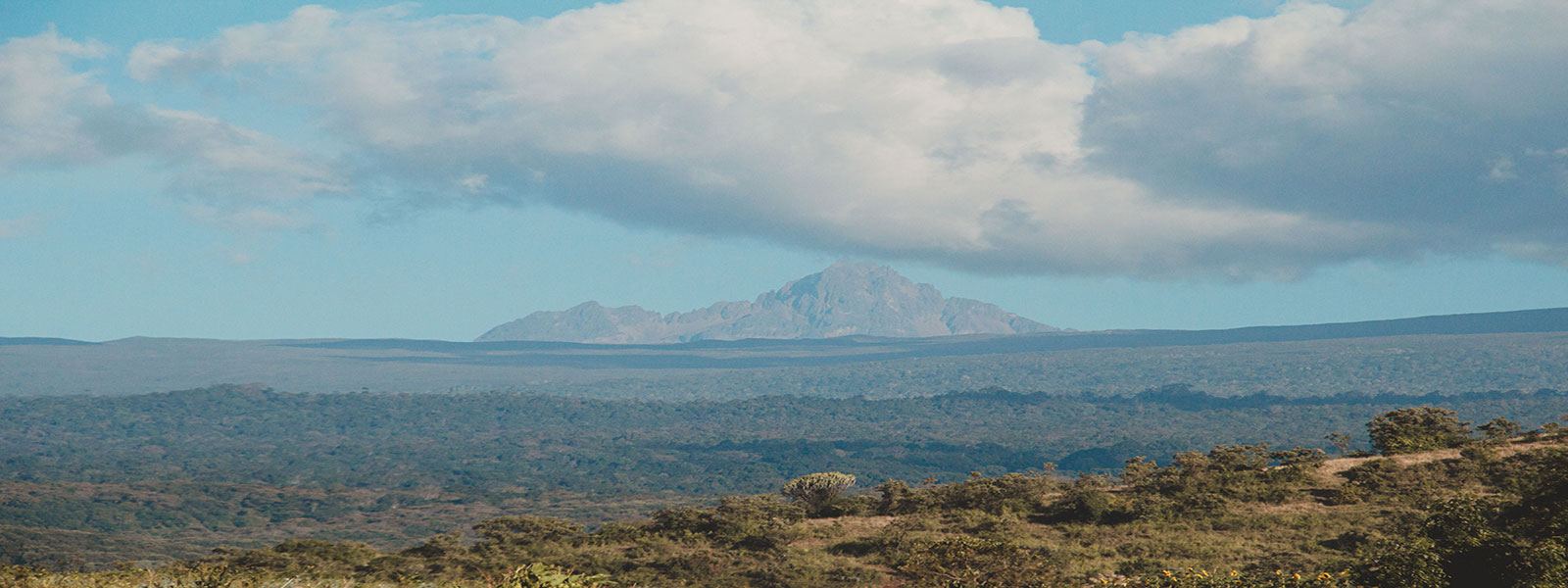
Mount Kenya National Park protects Africa’s second-highest mountain and the wild forests around it. On a clear morning, from the plains of central Kenya, you can see it rising above the clouds. It is a jagged crown of dark rock and white ice, sitting almost exactly on the equator. In fact, the country itself takes its name from the mountain. For the communities who live on its slopes, it is far more than a mountain. It is a sacred place, the home of God.
The park covers the upper slopes of this ancient, extinct volcano, along with the forests that surround it. The highest peaks, Batian (5,199 m) and Nelion (5,188 m), are serious technical climbs. However, fit trekkers with no climbing experience can reach the third peak, Point Lenana (4,985 m).
Together with the surrounding forest reserve, the park is a UNESCO World Heritage Site. It is valued for its remarkable scenery, its unique plant life and its role as one of Kenya’s most important water towers. But Mount Kenya is not only for climbers. It also sits close to some of Kenya’s best wildlife areas, including Ol Pejeta, Lewa and Samburu.
History of Mount Kenya National Park
Long before any outsider climbed it, Mount Kenya stood at the centre of the spiritual world of the communities around it. The Kikuyu call it Kirinyaga, often translated as the “mountain of brightness” or the “mountain with white patches”. They believe it is the earthly home of Ngai (or Mwene Nyaga), God. Traditionally, they built their homes with doors facing the mountain and prayed towards it. The Embu and Meru peoples also hold the mountain sacred and have their own names for it. Indeed, the name Kenya comes from these names for the mountain.
In 1849, the German missionary Johann Ludwig Krapf became the first European to report seeing Mount Kenya. At the time, people in Europe widely disbelieved his description of snow on the equator. Fifty years later, on 13 September 1899, the British geographer Sir Halford Mackinder made the first recorded ascent of Batian with the Alpine guides César Ollier and Joseph Brocherel. Mackinder named many of the mountain’s features, and we still use those names today. Nelion, by contrast, had to wait until 1929, when Eric Shipton and Percy Wyn-Harris reached the top.
One of the mountain’s most extraordinary stories took place during the Second World War. In 1943, three Italian prisoners of war, led by Felice Benuzzi, escaped from a British camp at Nanyuki. With homemade equipment and almost no food, they climbed the mountain and planted an Italian flag on Point Lenana. Then they quietly returned to their camp. Benuzzi’s book about the adventure, No Picnic on Mount Kenya, is still a mountaineering classic.
Landscapes and wildlife of Mount Kenya National Park
As you climb, you pass through a sequence of landscapes unlike anywhere else on Earth. First comes dense rainforest, then giant bamboo and misty moorland. Higher up, you find alien-looking giant groundsels and lobelias, glacial lakes and, finally, rock and ice.
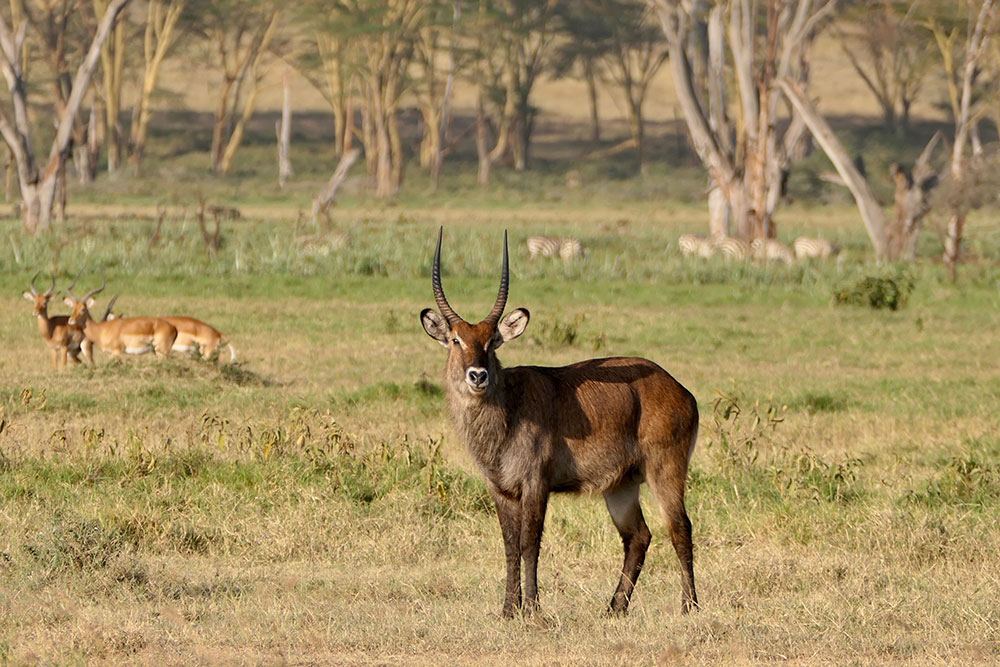
The forests hold elephants, buffaloes, bushbucks and rare antelope, and leopards are sometimes seen near forest waterholes. Colobus and Sykes’s monkeys move through the trees. Higher up, rock hyraxes sun themselves on the boulders around the huts. For birders, the forest and moorland also hold many highland species, from turacos and hornbills in the trees to sunbirds feeding on the giant lobelias.
Climbing Mount Kenya: the main routes
Most trekkers aim for Point Lenana. Nevertheless, the mountain demands respect: altitude affects everyone, and nights fall well below freezing at any time of year. So take time to acclimatise, drink plenty of water and climb with an experienced guide.
Sirimon route
The Sirimon route starts near Nanyuki on the northern side. This is the driest side of the mountain, so it is the best choice in the wetter months.
Naro Moru route
The Naro Moru route starts from the town of the same name on the western side. It is a direct route, and it includes a boggy section known as the “vertical bog”.
Chogoria route
The Chogoria route climbs the eastern side. Many trekkers consider it the most scenic route, with views of gorges, tarns and Lake Ellis.
Many climbers go up one route and come down another. Your guide will help you choose the right combination for your fitness and the season.
Things to do in Mount Kenya National Park
Stay at a forest tree lodge
Lodges deep in the forest overlook floodlit waterholes. At night, elephants, buffaloes, bushbucks and sometimes leopards come to drink. It is one of the easiest and most memorable ways to experience the mountain’s wildlife.
Day hikes and nature walks
Short guided walks through the forest or up to the moorland give non-climbers a taste of the mountain. Popular options include walks to Lake Ellis on the Chogoria side and forest walks near the Sirimon and Naro Moru gates.
Ngare Ndare Forest canopy walk
On the mountain’s northern side, within the World Heritage area, Ngare Ndare Forest offers a canopy walkway high in the trees. Below it, you can swim in crystal-clear waterfall pools.
Birdwatching
Look for turacos, hornbills and sunbirds in the forest and on the moorland.
Cultural and coffee experiences
The fertile slopes around Nyeri, Embu and Meru are famous for coffee and tea. Farm visits show how Kenya’s world-class coffee is grown and processed. Meanwhile, cultural visits introduce Kikuyu, Embu and Meru traditions.
Best time to visit Mount Kenya National Park
You can visit Mount Kenya all year, but the weather strongly affects trekking conditions. Usually, mornings are clear, and cloud builds in the afternoon.
- January to February and June to October (dry seasons): the best months for trekking, with clearer views and firmer trails.
- March to May and November (rains): wetter, muddier trails. If you climb then, the northern Sirimon route is the best choice.
- Any month: wildlife viewing from the forest lodges is rewarding all year.
How to get to Mount Kenya National Park
The park lies roughly 150–180 km north of Nairobi. The main gateway towns are Nanyuki (for the Sirimon and Burguret routes), Naro Moru (for the Naro Moru route) and Chogoria (for the Chogoria route). The drive from Nairobi takes around three to four hours on good tarmac roads. Roots Tours & Travel provides transfers from Nairobi or Jomo Kenyatta International Airport directly to your starting gate.
Alternatively, flights operate from Nairobi’s Wilson Airport to Nanyuki airstrip, a flight of under an hour. This is a convenient option if you are combining Mount Kenya with safaris in Laikipia or Samburu.
Plan your Mount Kenya trip with Roots
Mount Kenya pairs perfectly with a wildlife safari. For example, our 9 Days Explore Kenya Safari passes the mountain on its way to Samburu and Ol Pejeta. After a climb, you can also relax among the big cats of the Maasai Mara. If you love mountains, compare it with Mount Kilimanjaro in Tanzania.
The Kenya Wildlife Service sets park entry and climbing fees, and these change from time to time. Roots will confirm the current rates when you enquire. To compare more parks, see our guide to Kenya’s national parks and reserves. Then tell us your dates, and we will send you a free, tailor-made itinerary.
Not sure where to start? Chat with our safari specialists. We’ll help you find the perfect adventure.Every great journey begins with a conversation. Let’s plan yours.
Contact Us
- info@tourwithroots.com
- +256 776 83 1722
- +256 200 905 219
- Universal Apartments, Spine Road - Naalya - Kampala(U)