
Akagera National Park Rwanda
Home » Destinations » Rwanda » Akagera National Park Rwanda
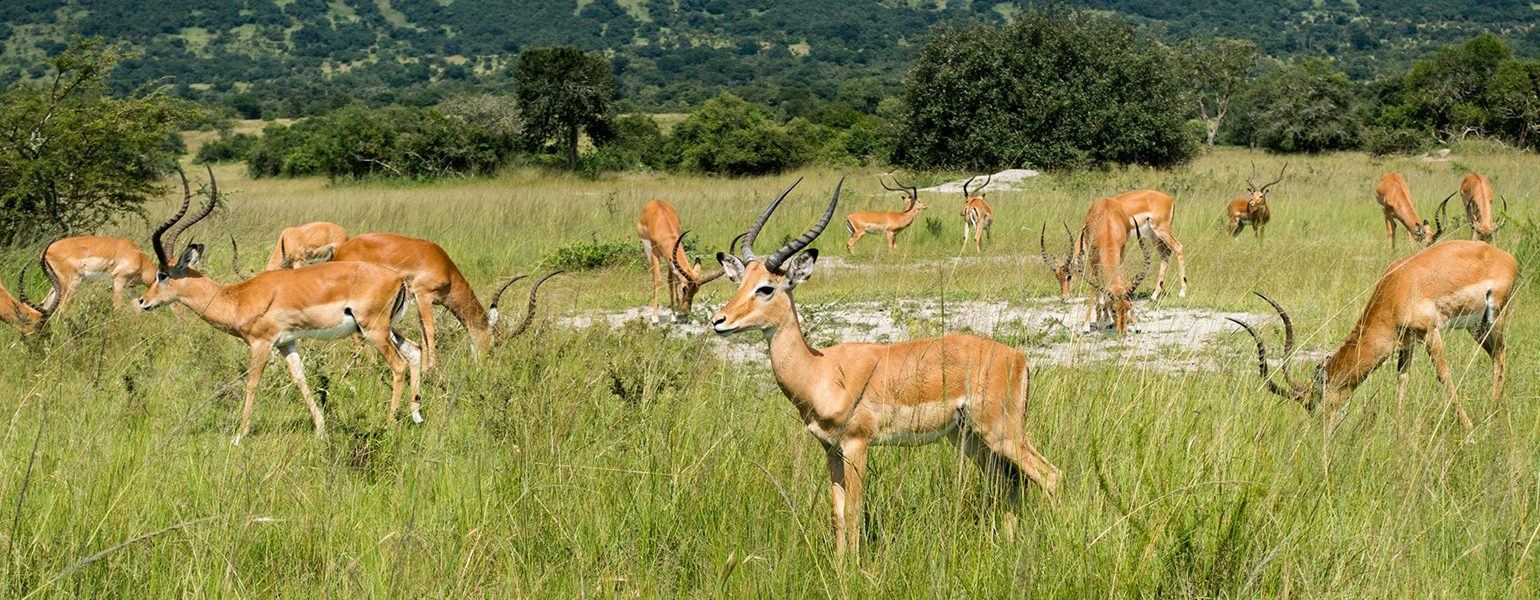
Akagera National Park is Rwanda’s only savannah park and its Big Five destination. It lies in the east of the country, along the border with Tanzania. Here you swap misty mountain forest for rolling plains, acacia woodland, lakes and papyrus swamps. As a result, Akagera National Park is the perfect partner to gorilla trekking in the north-west.
The Belgian authorities created the park in 1934. Today it covers 1,122 km² (433 sq mi) of savannah, hills and wetland. The Akagera River runs along its eastern edge and feeds Lake Ihema and a chain of smaller lakes. In fact, lakes and papyrus swamps make up about a third of the park. Together they form the largest protected wetland in East-Central Africa.
A comeback story: the history of Akagera
Akagera has not always been an easy place to visit. Between 1990 and 1994 the area was a battlefield in the Rwandan Civil War, so tourists stayed away. After the war, many returning families settled inside the park. As a result, wildlife numbers fell sharply, and the lions disappeared completely.
Long before that, the park was famous for African wild dogs. In fact, they were once so common that people called it the “Parc aux Lycaons”. Black rhinos arrived from Tanzania in 1957, and Maasai giraffes came from Kenya in 1986. However, poaching hit the rhinos hard, and the last confirmed sighting of the original population was in 2007.
The turnaround began in 2009, when the Rwanda Development Board and African Parks agreed to manage Akagera together. They trained a rhino tracking team, built a fence along the western boundary and brought back lost species. First, seven lions arrived from South Africa in 2015, the first lions in Rwanda for about 15 years. Then eastern black rhinos returned in 2017 and 2019, from South Africa and Europe. Today, Akagera National Park is once again home to the Big Five: lion, leopard, elephant, rhino and buffalo.
Wildlife in Akagera National Park
Thanks to years of careful protection, game numbers in Akagera keep growing. On a typical game drive you can see elephants, buffaloes, zebras, giraffes and several antelope species, such as topi, impala and eland. In addition, the open plains in the north are good lion country, while leopards hide in thicker bush.
The lakes add even more life. Lake Ihema holds one of the largest concentrations of hippos in East Africa, and big Nile crocodiles bask on its shores. Meanwhile, olive baboons, vervet monkeys and other primates move through the woodland.
Birds of Akagera
Akagera is also a superb birding park, with more than 490 bird species recorded. Look out for the red-faced barbet and the papyrus gonolek, two specials of the woodland and swamps. Besides these, fish eagles, kingfishers and many water birds feed along the lake shores.
Things to do in Akagera National Park
Akagera is made for classic safari activities. Because the park is compact, you can enjoy several of them in a short stay.
- Game drives: explore the plains and hills in a safari vehicle, ideally early in the morning or late in the afternoon, when animals are most active.
- Boat trips on Lake Ihema: glide past hippos, crocodiles and water birds at eye level.
- Bird watching: search the wetlands and woodland for swamp specials and migrants.
- Sport fishing: try your luck on the park’s lakes.
- Photography: capture wide grassy plains, cactus-dotted hills and patches of thin and thick forest.
If you are short on time, our 3-day Akagera wildlife safari is the easiest way to experience the park. Alternatively, we can add a night or two here to a longer Rwanda trip.
Best time to visit Akagera National Park
Akagera is open all year round. However, the dry seasons give you the best chance of good game viewing. These run from June to early October and from December to late February. During these months the grass is shorter, and animals gather near the lakes, so they are easier to find.
On the other hand, November is a quieter, greener month and a great choice for birders. At this time migratory birds arrive from as far away as Ethiopia and Sudan. Many of them cross Uganda and Tanzania and then settle in the Akagera River wetlands and along the shores of Lake Ihema.
How to get to Akagera
Akagera lies in eastern Rwanda, roughly a two- to three-hour drive from Kigali. Most visitors fly into Kigali International Airport and then travel by road with a driver-guide. Because the drive is short, you can easily add the park to your itinerary before or after you see the gorillas.
For example, many travellers pair a savannah safari here with mountain gorillas in Rwanda’s Volcanoes park and chimpanzees in Nyungwe Forest. To compare all the options, see our guide to Rwanda’s national parks and our page on gorilla trekking in Rwanda. For official visitor information, you can also visit Visit Rwanda.
Tips for your Akagera safari
- Start early: animals are most active in the cool morning hours, so plan to be on the road at sunrise.
- Stay at least one night: a day trip from Kigali is possible, but an overnight stay gives you an evening and a morning drive.
- Pack light layers: days are warm, yet early mornings can feel cool in an open vehicle.
- Bring binoculars and a zoom lens: they make a big difference for birds and shy animals.
- Protect yourself from insects: use repellent, especially near the lakes and wetlands.
Plan your Akagera National Park safari with Roots
Roots Tours & Travel plans tailor-made safaris across Rwanda, Uganda and the wider region. Simply tell us how many days you have and what you most want to see. Then we will suggest the best way to fit Akagera National Park into your route, so you can relax and focus on the wildlife.
Not sure where to start? Chat with our safari specialists. We’ll help you find the perfect adventure.Every great journey begins with a conversation. Let’s plan yours.
Contact Us
- info@tourwithroots.com
- +256 776 83 1722
- +256 200 905 219
- Universal Apartments, Spine Road - Naalya - Kampala(U)