
Bird Watching Tours
Home » Things to do » Bird Watching Tours
Bird Watching Tours: Birding in Uganda with Local Experts
Few countries pack so many birds into such a small space. Uganda has recorded more than 1,000 bird species in an area roughly the size of the United Kingdom. That is over 40% of all the species found in Africa. As a result, birding in Uganda appeals to everyone, from first-time safari travellers with borrowed binoculars to seasoned listers chasing their next lifer.
Our bird watching tours are planned around the birds you most want to see. We choose the habitats, set the early starts and pair you with local bird guides who know every call in the forest. Because many top birding sites lie inside Uganda’s gorilla and chimpanzee parks, you can also add primate trekking and game drives to the same trip. Park entry and guiding rules are set by the Uganda Wildlife Authority, and we include every fee in your quote.
Mabamba Swamp: The Best Shoebill Site in Uganda
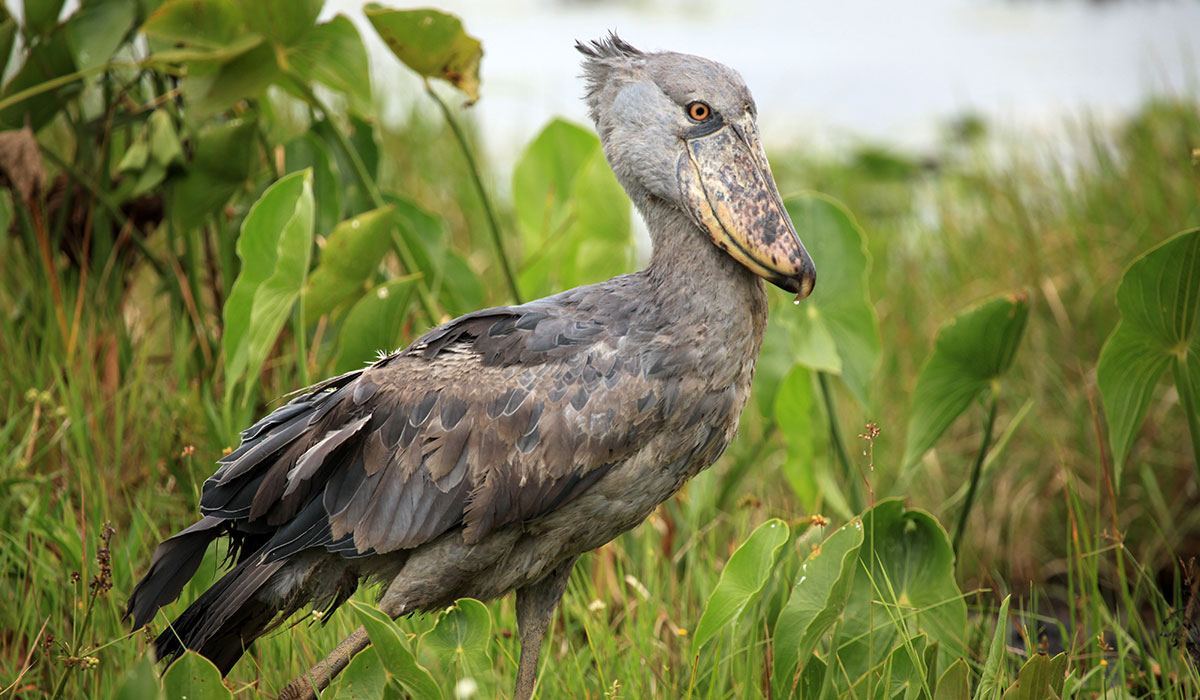
Mabamba Bay is a papyrus wetland on the shore of Lake Victoria, west of Entebbe. It is a protected Ramsar site and the most reliable place in the country to see the shoebill. This prehistoric-looking bird can stand well over a metre tall. You explore the channels by wooden canoe with a local guide, usually in the early morning. Besides the shoebill, look out for the papyrus gonolek, African jacana, malachite kingfisher and blue-breasted bee-eater. Since Mabamba is so close to the airport, it makes a perfect first or last day.
Bwindi Impenetrable National Park: Albertine Rift Endemics
Bwindi is famous for mountain gorillas, but birders know it for something else. The park holds most of the Albertine Rift endemics found in Uganda. These are birds that live only in the mountains along this part of the Rift Valley. In total, more than 350 species have been recorded here. The Ruhija sector, high on the eastern ridge, is the top spot for serious birders. From there, a steep trail leads down to Mubwindi Swamp, home of the rare African green broadbill. Other prizes include the handsome francolin, Rwenzori batis, regal sunbird and blue-headed sunbird. The Buhoma waterfall trail and the road through 'the Neck' between Buhoma and Ruhija are also excellent.
Mgahinga Gorilla National Park
On the slopes of the Virunga volcanoes, Mgahinga adds high-altitude species to your list. The gorge trail below Mount Sabinyo is the place to search for the Rwenzori turaco, with its bright crimson wings. You may also find the Rwenzori double-collared sunbird, Kivu ground thrush and dusky turtle dove. Many visitors combine a morning of birding here with golden monkey tracking.
Kibale Forest and Bigodi Wetland Sanctuary
Kibale Forest National Park is best known for chimpanzee trekking. However, it also shelters over 370 bird species. It is one of the few places in East Africa to search for the elusive green-breasted pitta, which takes a specialist guide and plenty of patience. Next door, the community-run Bigodi Wetland Sanctuary offers a gentle walk along boardwalks through the papyrus. Here, the great blue turaco is a common sight, alongside the white-spotted flufftail and several weaver species. The fees you pay at Bigodi support community projects in the village.
Queen Elizabeth National Park
With around 600 recorded species, Queen Elizabeth has one of the longest bird lists of any protected area in Africa. A boat trip on the Kazinga Channel brings you close to pelicans, African skimmers, fish eagles and large flocks of waders in season. On the Kasenyi plains and around the crater lakes, look for the grey crowned crane, martial eagle and several lark species. The Maramagambo Forest and the Ishasha sector add forest and woodland birds, so a few days here can give you well over 200 species.
Murchison Falls National Park
Murchison Falls combines big game with excellent birding along the Victoria Nile. The boat cruise to the delta, where the river enters Lake Albert, offers another good chance of the shoebill. Upstream, the trip towards the falls passes red-throated bee-eaters nesting in the riverbanks, Goliath herons and rock pratincoles on the rocks below the falls. On the northern savannah, Abyssinian ground hornbills walk among the giraffes. To the south, the Budongo Forest is the classic site for Puvel's illadopsis and the chocolate-backed kingfisher.
Semuliki National Park: A Taste of the Congo Basin
Semuliki, in the far west, is an extension of the great Ituri Forest of the Democratic Republic of Congo. As a result, it holds dozens of Central African species that are hard to find anywhere else in East Africa. Hornbills are a highlight, including the black-wattled, white-crested and red-billed dwarf hornbills. Other targets include the Nkulengu rail, yellow-throated cuckoo and lyre-tailed honeyguide. The forest is hot and humid, so we plan early starts and slow walks.
Kidepo Valley National Park
Kidepo, in Uganda's remote north-east, feels like a different country. Its semi-arid plains hold birds you will not meet on a typical Uganda itinerary, such as the ostrich, Kori bustard, Clapperton's francolin, Jackson's hornbill and Karamoja apalis. Raptors are plentiful too, from the secretary bird to the tiny pygmy falcon. Because Kidepo is far from the other parks, many birders arrive on a short scheduled or charter flight.
Why Uganda Is So Rich in Birds
Uganda sits where the dry savannahs of East Africa meet the rainforests of Central and West Africa. In addition, the Albertine Rift mountains run along its western border. This mix of habitats means you can watch savannah birds in the morning and forest specialists that same afternoon.
Distances are also short compared with most African birding destinations. For example, the shoebill swamps near Entebbe are about an hour from the airport. Meanwhile, the montane forests of Bwindi Impenetrable National Park and the lowland jungle of Semuliki National Park lie within a day’s drive of each other. English is widely spoken, and many local bird guides have spent years learning their own forests.
Finally, Uganda remains far quieter than the big safari circuits of Kenya and Tanzania. You will often have a forest trail, a swamp channel or a stretch of savannah to yourself.
Birds on Every Birder’s Wish List
Every traveller arrives with a few names they hope to tick off. The shoebill tops most lists, and for good reason. With its huge bill and steady stare, it looks more like a dinosaur than a stork. The great blue turaco, about 75 centimetres long and dressed in blue, green and yellow, comes a close second.
Uganda’s national bird, the grey crowned crane, appears on the national flag and is common in wetlands and farmland. Forest lovers go after the African green broadbill, green-breasted pitta and Rwenzori turaco. Meanwhile, those who love colour rarely leave without photos of kingfishers, sunbirds and bee-eaters. Tell us which birds matter most to you, and we will build the route around them.
Best Time for Birding in Uganda
Birding in Uganda is rewarding all year, because the country lies on the equator and most species are resident. Still, each season has its own advantages.
From November to April, migrant birds from Europe and Asia join the resident species, so your list grows. Many residents also breed during the rains, from March to May and again in October and November. During these months, birds sing more, wear their brightest plumage and are easier to find. The trade-off is muddier trails and the odd afternoon downpour.
In contrast, the drier months of June to September and December to February make walking and driving easier. They also suit travellers who want to combine birding with gorilla trekking in Uganda. The shoebill can be seen all year at Mabamba, although early mornings are best in any season.
How We Plan Your Uganda Birding Tour
No two birders want the same trip. Some aim for the longest possible list, while others care more about a few special birds or the perfect photograph. For this reason, we start every tour with a conversation about your goals, your experience and your pace.
A typical Roots birding tour includes a 4×4 safari vehicle with a pop-up roof, an experienced driver-guide and specialist local bird guides at key sites. We book lodges close to the trailheads, arrange early breakfasts or packed meals, and leave room in the schedule for a second try at a missed bird. If your partner is less keen on birds, we add gorilla trekking, game drives in the savannah parks or community visits so everyone enjoys the trip.
Birding in Uganda: Frequently Asked Questions
It depends on your route, the season and how long you stay. On a one-week trip, most visitors see between 200 and 300 species. Over a two-week tour that covers forest, wetland and savannah, keen birders often record more than 400.
No wild bird is guaranteed. However, Mabamba Swamp gives a very good chance, especially early in the morning. For extra insurance, we can add a second shoebill site, such as the Murchison Falls delta.
Yes. We often plan mixed trips where one person goes birding while the other treks gorillas, enjoys game drives or visits local communities. Most of our sites are in parks with plenty to see beyond the birds.
Yes. Tell us that photography is your main goal, and we will plan longer stops, better light and a vehicle with room for camera gear. Boat trips on the Kazinga Channel and the Nile are especially good for close-up shots.
There is no separate birding permit. You pay the standard park entry fee, plus a guided walk or community fee at some sites, such as Bigodi and Mabamba. We include all of these in your quote.