Mount Kilimanjaro
Home » Destinations » Tanzania » Mount Kilimanjaro
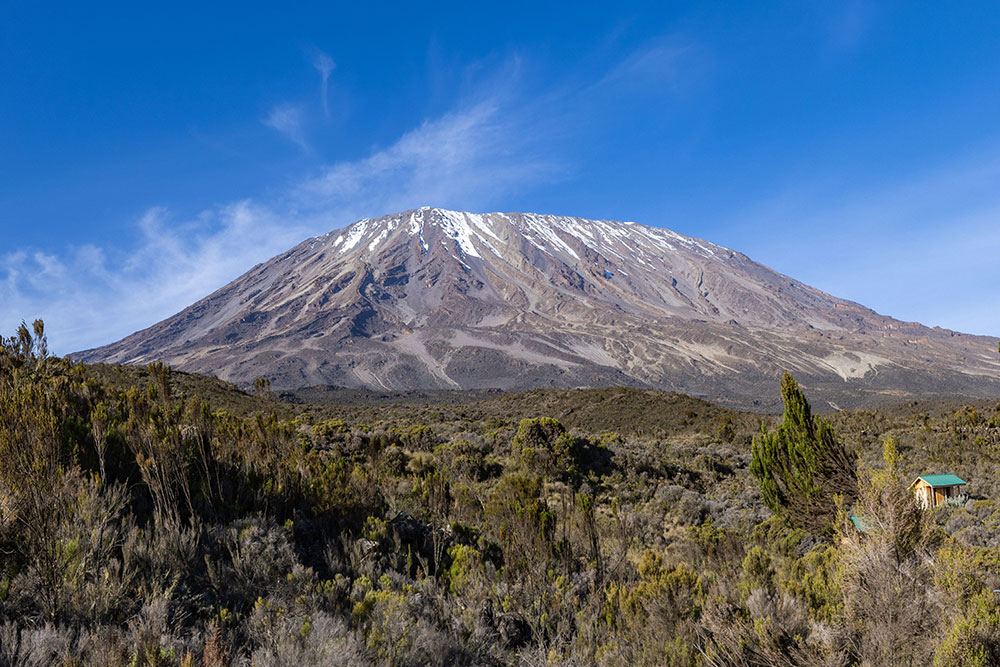
Mount Kilimanjaro rises alone from the plains of East Africa, a vast snow-capped dome floating above the clouds. It is the highest mountain in Africa and the tallest free-standing mountain in the world. It is also one of the Seven Summits, the highest peaks on each continent. Unlike most of the world’s great mountains, however, you can reach its summit on foot, without ropes or technical climbing skills.
Climbing Kilimanjaro is a journey through almost every climate on Earth. First, you walk through lush rainforest alive with monkeys and birds. Next, you climb through heather and moorland dotted with strange giant plants. Then you cross a barren alpine desert. Finally, you reach a world of rock, ice and glaciers at 5,895 metres.
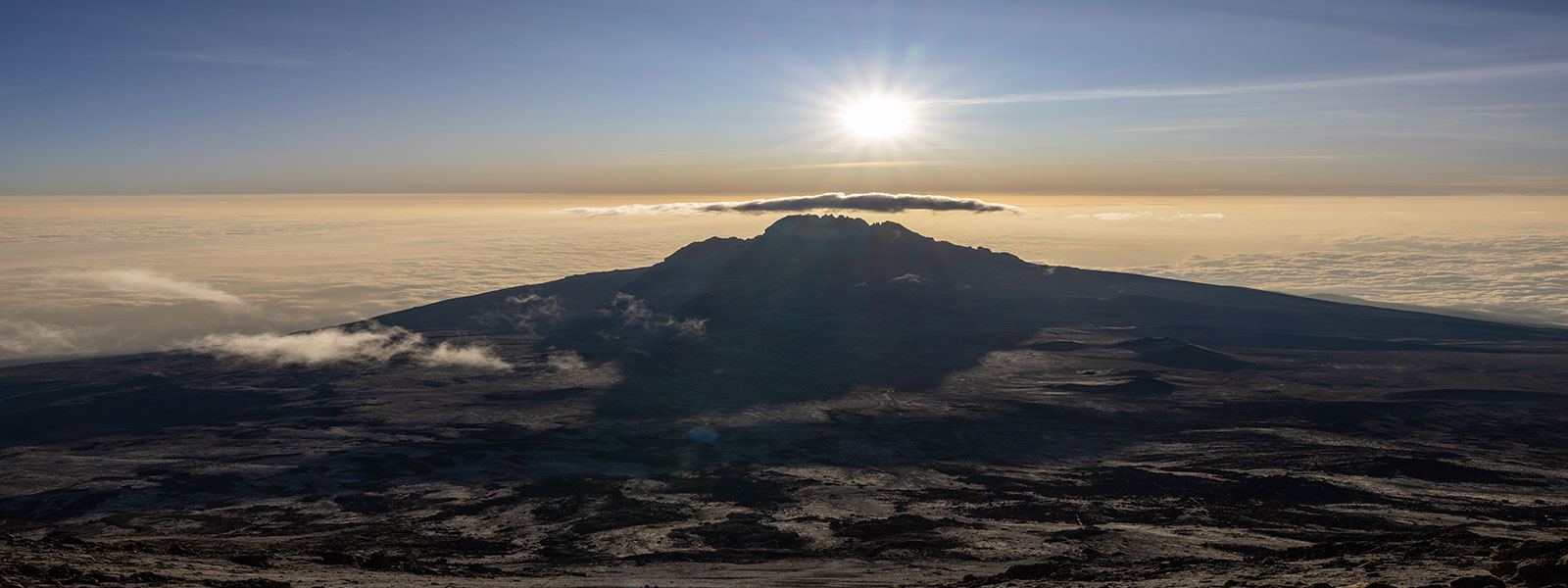
On summit morning, after a long night climbing by headtorch, you watch the sun rise over Africa from Uhuru Peak. Many climbers call it the greatest moment of their lives.
Kilimanjaro lies in northern Tanzania, close to the Kenyan border. It is protected within Kilimanjaro National Park, a UNESCO World Heritage Site. Each year, tens of thousands of people from all over the world attempt the climb. Not all of them reach the top, because altitude is the great challenge. Still, the right route, enough days on the mountain and an experienced team give you the best possible chance.
Kilimanjaro’s famous ice is also disappearing. Scientists estimate that more than 80% of the ice present in the early twentieth century has already gone. Some even predict that the summit glaciers could vanish within decades. For many climbers, seeing the remaining walls of blue-white ice on the summit plateau is the most moving part of the climb.
History of Mount Kilimanjaro
Kilimanjaro is a giant stratovolcano. Eruptions along the East African Rift built it over the last million years or so. It has three volcanic cones. Shira, the oldest, has collapsed into a high plateau. Mawenzi, now a jagged ring of eroded rock, is the second-highest peak. Kibo, the youngest and highest, is dormant rather than extinct, and gas still escapes from vents inside its summit crater.
The fertile lower slopes have long been home to the Chagga people. These skilled farmers grow bananas and coffee on terraced plots, watered by an ancient system of channels fed by mountain streams. The mountain features in their traditions, and many of today’s guides and porters are Chagga.
In 1848, the German missionary Johannes Rebmann became the first European to report snow on Kilimanjaro. At first, geographers in Europe refused to believe that snow could exist so close to the equator. Then, on 6 October 1889, the German geographer Hans Meyer and the Austrian mountaineer Ludwig Purtscheller reached the summit. A young local man, Yohani Kinyala Lauwo, guided them. Lauwo went on to guide climbers for decades, and his role is now rightly celebrated.
Later, the upper mountain became a game reserve and then a forest reserve. In 1973, the area above the tree line became Kilimanjaro National Park, which opened to the public in 1977. In 1987, UNESCO listed the park as a World Heritage Site. Later extensions added part of the montane forest and brought its size to around 1,688 square kilometres.
Climate zones and wildlife on the mountain
Kilimanjaro is a climb, not a game park, so do not expect big game on the trail. Even so, the mountain is full of life, and each zone feels like a new world.
- Rainforest: the lower slopes are home to black-and-white colobus and blue monkeys, bushbucks and duikers. Look for colourful birds such as Hartlaub’s turaco, silvery-cheeked hornbill and many sunbirds.
- Heather and moorland: here you find giant groundsels and lobelias, strange plants found only on East Africa’s high mountains.
- Alpine desert: the air is thin and dry, with very little plant life. Days are hot, but nights are freezing.
- Arctic summit: finally, you reach rock, ice, glaciers and the vast crater of Kibo.
The quieter western and northern routes, such as Lemosho and Rongai, generally offer the best chances of seeing forest wildlife.
Mount Kilimanjaro climbing routes
There are several main routes up the mountain. Each has its own scenery, difficulty, crowd levels and acclimatisation profile. In fact, choosing the right route is one of the most important decisions you make, because it affects your chance of reaching the summit.
Machame route
Starting from the southwest, Machame is the most popular route on the mountain and one of the most scenic. It climbs through rainforest to the Shira Plateau. Then it traverses beneath Kibo’s southern glaciers and passes Lava Tower, at about 4,600 m, before descending to Barranco Camp. This classic “climb high, sleep low” day helps your body adjust. Next comes the Barranco Wall, a steep but non-technical scramble that many climbers find the most exciting part of the trek. Finally, the summit attempt starts from Barafu Camp via Stella Point. Machame gets busy in peak season.
Marangu route
Marangu climbs from the southeast and is the only route with hut accommodation instead of tents. Its gentle, steady gradient makes it feel easier at first. However, it offers fewer chances to “climb high, sleep low”, so adding an extra acclimatisation day is wise.
Lemosho and Rongai routes
Lemosho starts in the remote western forest and joins the Machame trail on the Shira Plateau. As a result, it combines quiet early days with great scenery. Rongai, by contrast, approaches from the north, near the Kenyan border. It is drier and quieter, which suits climbers who want fewer crowds.
We will help you match a route to your fitness, experience and travel dates.
Things to do on Mount Kilimanjaro
Climb to Uhuru Peak
This is the ultimate Kilimanjaro experience. You trek through every climate zone to the highest point in Africa, then watch the sunrise over the glaciers on summit morning.
Kilimanjaro day hike
You do not need to reach the summit to walk on the mountain. A guided day hike from Marangu Gate climbs through lush rainforest to Mandara Hut, at about 2,720 m. A short detour leads to the rim of Maundi Crater, with wide views over the plains. On clear days, you also see the peaks of Kibo and Mawenzi. It suits non-climbers, families with older children and anyone short on time. A guide and a park permit are required.
Photography
Mist-filled rainforest, giant groundsels, the jagged spires of Mawenzi and the vast glaciers make the mountain a photographer’s dream. Pack a wide-angle lens and spare batteries, because the cold drains them quickly.
Altitude and preparation
Altitude, not fitness, is the biggest reason climbers turn back. Therefore, the most important rule is simple: go slowly. Your guides will remind you of this with the Swahili words pole pole, meaning “slowly, slowly”.
- Choose a route with good acclimatisation and allow extra days where you can.
- Drink plenty of water, eat well and rest whenever you stop.
- Tell your guide at once if you feel unwell, and follow their advice.
- Train by walking on hills for several hours at a time, ideally in the boots you will wear.
In addition, speak to your doctor before you travel, especially about altitude. A hike in Arusha National Park on the slopes of Mount Meru also makes a good warm-up.
Best time to climb Mount Kilimanjaro
You can climb all year. However, the dry seasons offer the best conditions, clearer views and safer trails.
- Late June to October: the main dry season. It brings cool, clear weather and is the most popular time to climb.
- December to mid-March: a shorter dry season. It is warmer and generally clear, with a chance of snow on the summit, and it is popular over the holidays.
- April, May and November: the rainy months. Trails get wet and muddy, but you meet far fewer climbers.
Many climbers also plan their summit night around a full moon. The moonlight lights the trail and creates unforgettable views.
How to get to Mount Kilimanjaro
Most climbers fly into Kilimanjaro International Airport (JRO), which lies between Arusha and Moshi. From there, it is a short drive to the town of Moshi, the usual base for climbs. Then, on the first day, you transfer to the gate for your chosen route.
You can also reach the area by road from Arusha or from Nairobi in Kenya. Climbing permits and park fees are set by Tanzania National Parks and change from time to time. We will confirm the current rates when you enquire.
Plan your Kilimanjaro trip with Roots
After the climb, many guests reward themselves with a safari. You can watch the Great Migration on the Serengeti plains or see the elephant herds of Tarangire. Our 7-day Tanzania wildlife safari is an easy add-on. Alternatively, rest your legs on the beaches of Zanzibar.
To compare other parks, see our guide to Tanzania national parks. Then tell us your dates, and we will plan your climb and safari together.
Not sure where to start? Chat with our safari specialists. We’ll help you find the perfect adventure.Every great journey begins with a conversation. Let’s plan yours.
Contact Us
- info@tourwithroots.com
- +256 776 83 1722
- +256 200 905 219
- Universal Apartments, Spine Road - Naalya - Kampala(U)