
Kibale Forest National Park
Home » Destinations » Uganda » Kibale Forest National Park
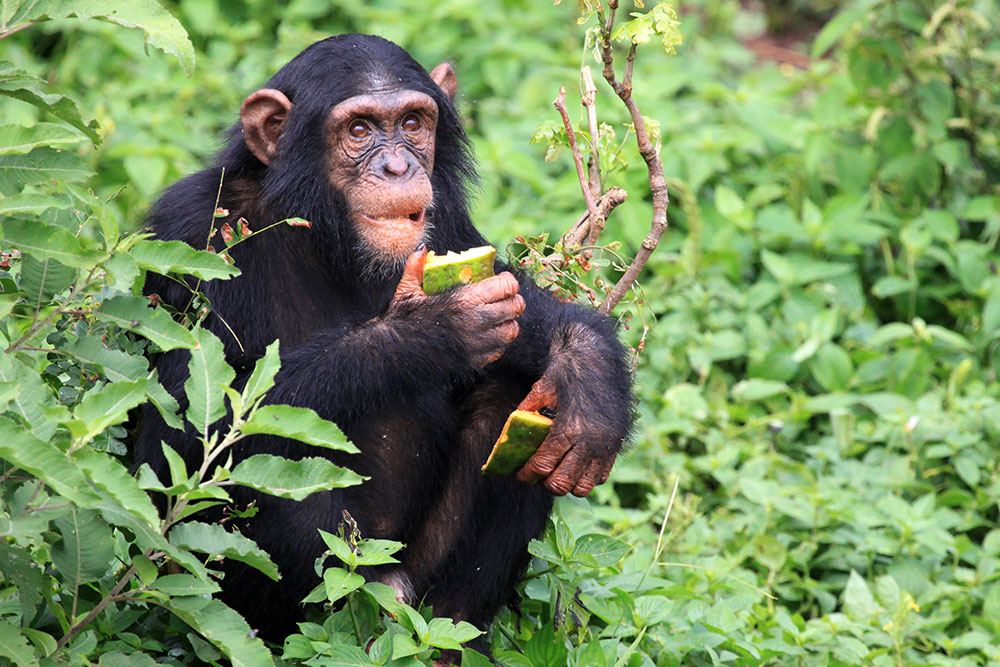
Kibale Forest National Park is the best place in Uganda to track wild chimpanzees. Have you ever wanted to watch our closest relatives up close? Or to see several kinds of monkeys in a single morning? Then Kibale is the place for you.
The park lies in western Uganda, close to the town of Fort Portal. It covers about 766 square kilometres of moist evergreen rainforest. In addition, it is one of the last areas in East Africa that holds both lowland and montane forest. To the south, the forest joins Queen Elizabeth National Park, so animals can move freely between the two.
Kibale is famous for its habituated chimpanzees. However, it also has twelve other primate species. That gives the park one of the highest numbers and densities of primates in Africa. Below, you will learn what you can see, what you can do, when to go and how to fit Kibale into your Uganda safari.
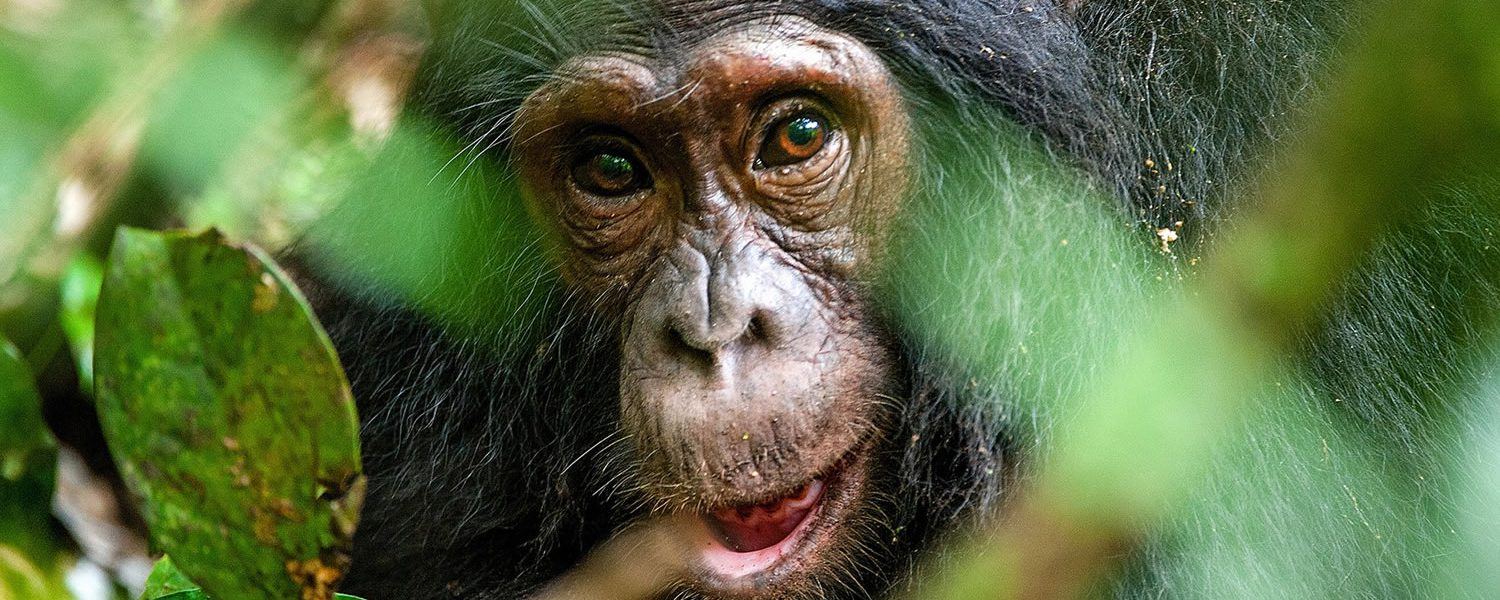
Wildlife in Kibale Forest National Park
Primates
Chimpanzees are the stars of the forest. Besides them, you can look for the endangered red colobus, the rare L’Hoest’s monkey and the grey-cheeked mangabey. Black-and-white colobus, olive baboons, blue monkeys and red-tailed monkeys are also common. In fact, your chances of seeing primates here are excellent.
At night, the forest belongs to other primates. Bush babies and pottos only come out after dark. So, a guided night walk with spotlights is the best way to find them.
Birds and other wildlife
Kibale is also a rewarding birding destination. Look out for the green-breasted pitta, African pitta, red-chested flufftail, white-naped pigeon, joyful greenbul and grey-winged robin. Other species include the Abyssinian ground thrush and several forest flycatchers.
Larger animals live here too, although they are hard to see in thick forest. You may find signs of elephants, bush pigs and buffaloes along the trails.
Trees and plants
Researchers have recorded around 229 tree species in the park. Many of these trees depend on animals, such as primates and birds, to spread their seeds. As a result, the forest and its wildlife are closely linked.
Chimpanzee trekking in Kibale
Chimpanzee tracking is the main activity in Kibale Forest National Park. Compared with gorilla trekking, it is usually simpler and less steep. Groups are small, with up to eight people, and knowledgeable forest guides lead each walk. You must be at least 15 years old to join.
Once the guides find the chimps, you spend time watching them feed, call and move through the trees. The forest can be loud and exciting when a group is active. Wear long trousers and a long-sleeved shirt, because they protect you from insects and thorny plants.
For a longer encounter, ask about the chimpanzee habituation experience. This lets you spend much more of the day with a chimp community as it gets used to people. To compare options, see our page on primate tours in Uganda.
Bigodi Wetland Sanctuary and nature walks
Bigodi Wetland Sanctuary lies just outside the park. It is a large swamp and bird sanctuary that the local community helps protect. On a guided walk, you can see monkeys, baboons and many birds, including the great blue turaco. Lucky visitors may also spot the shy sitatunga antelope.
In addition, you can join a village walk around Bigodi. You will learn about local farming, crafts and daily life. The Batooro and Bakiga are the main communities around the park. For them, the forest has long been a source of food, fuel and herbal medicine. Today, tourism also brings jobs and a market for local crafts.
History of the park
Kibale was first protected as a forest reserve in 1932. At that time, part of it was managed for logging. Later, in 1993, it became a national park to give the forest stronger protection. Since then, the forest has recovered well, and it is now one of the most studied tropical forests in Africa.
Best time to visit Kibale Forest National Park
You can track chimpanzees all year round. Even so, the drier months are usually the most comfortable. These are roughly December to February and June to September. During these months, forest trails are firmer and easier to walk.
The wetter months bring more mud and showers. On the other hand, the forest is lush and there are fewer visitors. Whatever the season, pack a light rain jacket and good walking shoes.
How to get to Kibale
Kibale lies to the south-east of Fort Portal. From Kampala, you drive west to Fort Portal and then follow the road towards Kamwenge. Beyond the Mpanga River bridge, the road reaches the main park signpost after about 12 km. Then, after around 24 km, you arrive at the Kanyanchu tourist centre, where chimp tracking begins.
Many travellers break the trip with a stop at the crater lakes near Fort Portal. Alternatively, you can arrive from Queen Elizabeth National Park in the south.
Where to stay
There are lodges for every budget around the park, from simple guesthouses to luxury lodges. Well-known options include Primate Lodge, Ndali Lodge, Kyaninga Lodge, Crater Safari Lodge and Papaya Lodge. We will suggest the best fit for your style and budget.
Safaris that visit Kibale
Kibale works well on short and long trips. For a focused visit, our 3 day Kibale chimp safari is ideal. If you want gorillas as well, the 5 day Uganda primates expedition combines chimps in Kibale with gorillas in Bwindi. Meanwhile, the 7 day primates and wildlife tour adds game drives in Queen Elizabeth National Park. You can also read more about combining gorillas and chimpanzees.
The Uganda Wildlife Authority manages the park and sets permit rates, which change from time to time. So, Roots will confirm the current rate when you enquire. Tell us your dates, and we will plan a tailor-made trip to Kibale Forest National Park with a free itinerary.
Not sure where to start? Chat with our safari specialists. We’ll help you find the perfect adventure.Every great journey begins with a conversation. Let’s plan yours.
Contact Us
- info@tourwithroots.com
- +256 776 83 1722
- +256 200 905 219
- Universal Apartments, Spine Road - Naalya - Kampala(U)