Lake Nakuru National Park
Home » Destinations » Kenya » Lake Nakuru National Park
Lake Nakuru National Park is one of the best places in Africa to see rhinos, just a few hours from Nairobi. From the rim of the Great Rift Valley, the lake opens out below you. It is a broad sheet of water fringed by pink and white birds and framed by rocky cliffs, golden grassland and forests of yellow fever trees. Within minutes of entering, you may be watching a white rhino grazing beside the road. Equally, you might find a herd of buffalo at the shore or a Rothschild’s giraffe browsing among the acacias.
The park covers around 188 square kilometres on the shores of one of the soda lakes of Kenya’s Rift Valley, just outside the city of Nakuru. It is one of the country’s most important rhino sanctuaries, home to both black and white rhinos.
Add lions that sometimes climb into trees, leopards, endangered Rothschild’s giraffes and more than 400 bird species. Then add spectacular viewpoints, and you have one of Kenya’s most rewarding parks.
History of Lake Nakuru National Park
Lake Nakuru lies on the floor of the Great Rift Valley, the vast crack in the Earth’s surface that runs through East Africa. Thousands of years ago, it was part of a much larger freshwater lake that also covered today’s Lakes Elementaita and Bogoria. As the climate dried, however, the lakes shrank and became shallow and alkaline. The name Nakuru is usually said to come from a Maasai word meaning “dusty place”.
In 1961, the authorities declared the southern part of the lake a bird sanctuary, largely to protect the vast flamingo flocks. Later, they expanded the protected area and upgraded it to a full national park. In the 1970s, conservationists brought endangered Rothschild’s giraffes in from western Kenya to give them a safe new home, and their numbers grew.
By the 1980s, poaching had brought Kenya’s rhinos close to extinction. In response, rangers fenced Lake Nakuru, and it became one of the country’s first rhino sanctuaries. Conservationists moved black rhinos here for protection and introduced southern white rhinos. The project was a great success. Since then, Nakuru has supplied rhinos to restock other parks across Kenya, and today it holds one of the largest rhino populations in the country. The Kenya Wildlife Service manages the park.
Rhinos, lions and other wildlife
Rhinos are the headline act. White rhinos graze in open grassland, often close to the track, so you get excellent photos. Black rhinos are shyer and browse in thicker bush, but your guide knows where to look.
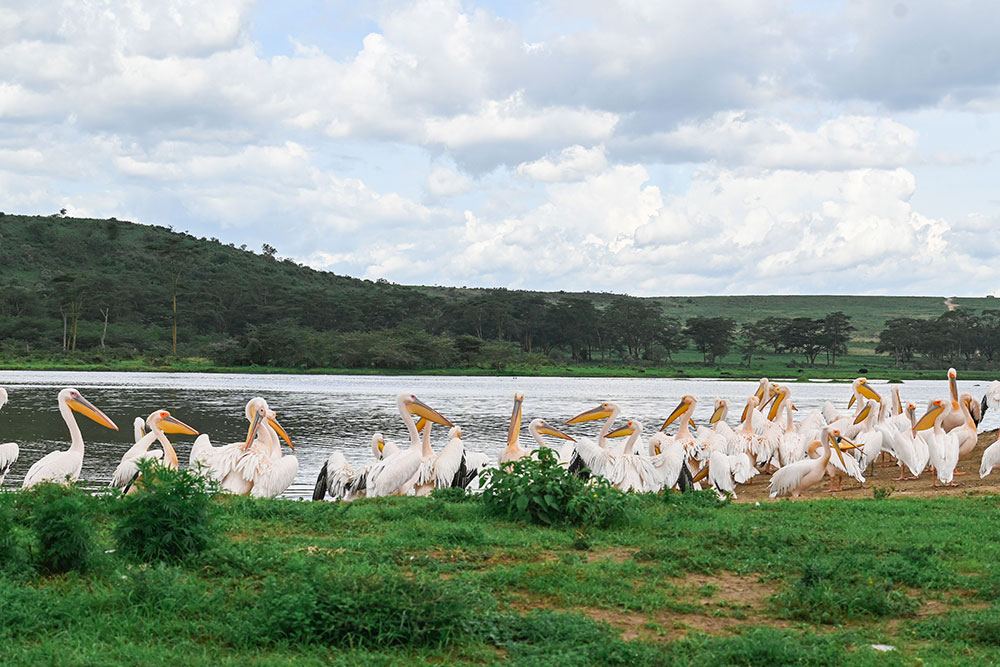
Lions live here too, and some like resting in the branches of acacia trees. Leopards also roam the park, especially in the woodland. In addition, you can expect buffaloes, Rothschild’s giraffes, zebras, waterbucks, impalas, warthogs and olive baboons. Large flocks of pelicans, herons and cormorants gather along the shore as well.
Flamingos at Lake Nakuru today
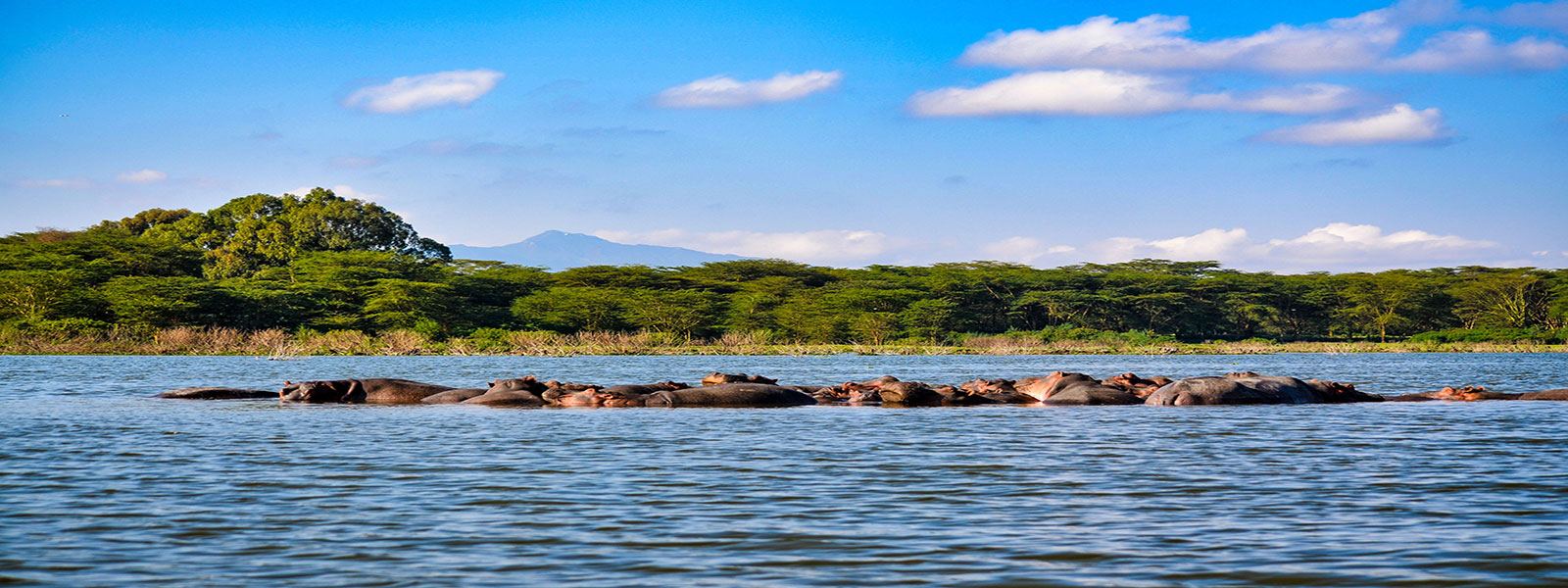
Lake Nakuru was once world-famous for flocks of a million or more flamingos that turned the shoreline pink. Things have changed, though. Since around 2010, heavy rains and changes in the surrounding catchment have caused the lake, and several other Rift Valley lakes, to rise dramatically. The lake has grown much larger. It has flooded parts of the shoreline, roads and some old park buildings, and drowned stands of acacia along its edge.
The extra fresh water has also diluted the lake’s saltiness. This affects the algae that flamingos feed on. As a result, flamingo numbers now vary greatly. You may still see thousands, but it is no longer guaranteed. Meanwhile, the park has adapted with new roads and facilities, and the rest of its wildlife continues to thrive.
Things to do in Lake Nakuru National Park
Game drives and rhino viewing
Game drives are the main activity and the best way to see rhinos, lions, giraffes and buffaloes. Because the park is compact, a half-day or full-day drive covers most areas. Sightings are often close to the vehicle.
Birdwatching
Whether you are a serious birder or simply enjoy watching pelicans, Nakuru’s shoreline and woodland offer outstanding birdlife all year. Migrants are present from roughly October to April.
Viewpoints: Baboon Cliff and Out of Africa
Stop at the park’s viewpoints for panoramic photos of the lake and the Rift Valley. Baboon Cliff is especially beautiful in the late afternoon.
Flamingo viewing
When the flocks are present, the sight and sound of thousands of flamingos feeding along the shore is unforgettable. Your guide will know where to find them.
Picnic at Makalia Falls
Break up a full-day safari with a picnic lunch at the falls in the south of the park. There, you can stretch your legs at a designated site.
Best time to visit Lake Nakuru National Park
The park is open year-round, and you can see its rhinos and other wildlife in every season. Days are usually warm, and nights are cool at this altitude.
- June to October and January to February (dry seasons): thinner vegetation and easier game viewing.
- November to April: the most rewarding period for birders, when migratory birds are present.
- Any month: flamingo numbers vary, so treat them as a bonus rather than a promise.
How to get to Lake Nakuru National Park
The park lies about 160 km northwest of Nairobi along the Nairobi–Nakuru highway. The drive takes roughly two and a half to three hours. On the way, the road climbs to the edge of the Great Rift Valley, where a viewpoint offers dramatic views over the valley floor. The park has several gates, with the main gate close to Nakuru city. Roots Tours & Travel provides transport from Nairobi, Jomo Kenyatta International Airport or your hotel.
Most visitors travel by road because the drive is short. Alternatively, we can arrange charter flights to the Naishi airstrip inside the park. This is useful when you combine Nakuru with the Masai Mara or Samburu.
Plan your Lake Nakuru safari with Roots
Lake Nakuru sits neatly between Nairobi and the Mara, so it fits into many Kenya trips. For example, our 6 Days Magical Kenya Safari combines it with Amboseli and the Maasai Mara. You can also pair it with the dry-country wildlife of Samburu.
To compare more parks, see our guide to Kenya’s national parks and reserves. Then tell us your dates, and we will send you a free, tailor-made itinerary.
Not sure where to start? Chat with our safari specialists. We’ll help you find the perfect adventure.Every great journey begins with a conversation. Let’s plan yours.
Contact Us
- info@tourwithroots.com
- +256 776 83 1722
- +256 200 905 219
- Universal Apartments, Spine Road - Naalya - Kampala(U)