
Mount Nyiragongo Congo
Home » Destinations » Congo » Mount Nyiragongo Congo
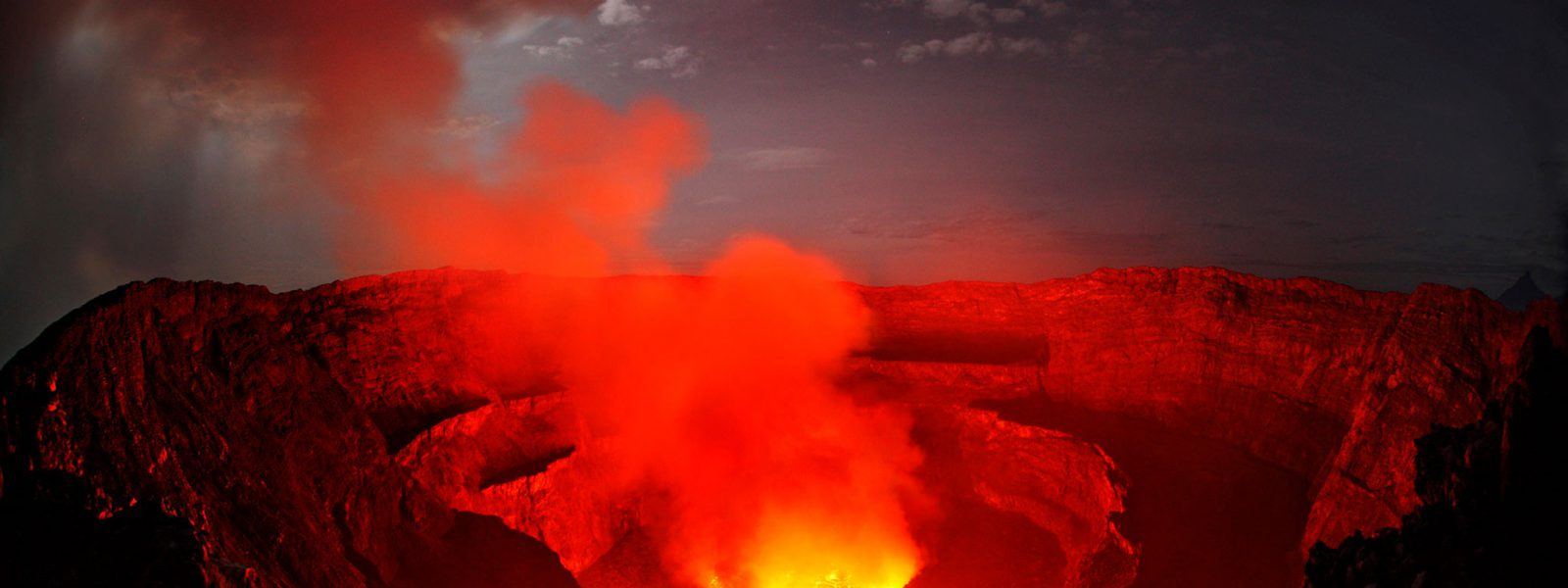
Mount Nyiragongo is one of the most active volcanoes in the world, and one of Africa’s great adventures. It rises to about 3,470 m in Virunga National Park, eastern DR Congo, roughly 20 km north of Goma and close to the Rwandan border. Climbers come here for one reason above all: to stand on the crater rim at night and look down into a glowing lava lake.
Nyiragongo is a steep-sided stratovolcano. Its main crater is about two kilometres wide. For much of recent history, it has held one of the largest lava lakes on Earth, and cooled lava benches still ring the inner crater walls. However, the lake’s level and activity change over time, so what you see depends on the volcano’s mood.
A history of eruptions
Nyiragongo has erupted many times since records began in the late 1800s. In January 1977 the crater walls fractured, and the lava lake drained in less than an hour. As a result, lava raced down the slopes at speeds of up to about 60 km/h, one of the fastest lava flows ever recorded. Sadly, many people lost their lives.
Then, on 17 January 2002, a long fissure opened on the southern flank after months of seismic activity. Lava poured into the city of Goma and covered part of the runway at Goma International Airport. Fortunately, around 400,000 people were evacuated across the border to Gisenyi in Rwanda. Later, in May 2021, another flank eruption sent lava towards the northern edge of Goma.
Because of this activity, scientists watch the volcano closely. In addition, the park authority opens or pauses hikes depending on the volcano’s current status.
Hiking Mount Nyiragongo
You do not need to be an athlete or an expert mountaineer to climb Nyiragongo. However, you do need good health, steady legs and a positive spirit. The hike usually starts in the morning at the Kibati ranger post, and the climb to the summit takes about five to six hours.
The trail rises through forest, then crosses old lava fields and finally climbs steep, rocky slopes near the top. Along the way you stop at rest points for water and snacks. At the summit you spend the night in simple huts on the crater rim, and dinner is served there. Then, after dark, the glow from the crater is at its most dramatic. Next morning, you descend after breakfast. In total, the hike takes two days.
Porters and equipment
Porters are available for hire at the ranger post, and they can carry your bag for you. In addition, some hiking equipment can be hired locally.
What to pack
- Warm clothes, a hat and gloves, because the summit is cold at night
- Strong, broken-in hiking boots
- A rain jacket and a sleeping bag
- Insect repellent, a head torch and plenty of water
- Snacks for the climb and a small day pack
Wildlife and scenery on the way up
Nyiragongo is mainly a volcano hike rather than a game walk. Still, the lower forest is home to birds, monkeys and small mammals, so keep your eyes open. Higher up, the views are the real reward. On clear days you can see Lake Kivu, the city of Goma and the other Virunga volcanoes, including neighbouring Nyamuragira.
Best time to hike Mount Nyiragongo
Hikes can run all year round, when the park has them open. That said, the drier months, from June to September and from December to February, usually bring easier trails and clearer views. In contrast, the rainy seasons make the path muddy and the summit more often hidden by cloud. Either way, nights on the rim are always cold, so pack well.
How to get to Mount Nyiragongo
Most travellers start in Kigali or in Gisenyi (Rubavu) on Lake Kivu in Rwanda. From Gisenyi it is a short drive to the Goma border post. After crossing into DR Congo, you then drive on to the Kibati ranger post at the foot of the volcano.
Because the volcano lies so close to Rwanda, it is easy to combine with mountain gorillas. For example, you can trek gorillas in Virunga’s gorilla sector or in Rwanda’s Volcanoes park.
Travel conditions in eastern DR Congo
Travel conditions in eastern DR Congo change, and so does the operating status of the park and the volcano hike. For this reason, Roots checks the current situation and the park’s operating status before confirming any trip. We will explain the latest position when you enquire. You can also follow updates from Virunga National Park.
How fit do you need to be?
The climb is steep, and the final section over loose rock is tiring. Even so, most reasonably fit travellers make it to the top by walking slowly and taking regular breaks. In the weeks before your trip, try a few long walks or hill hikes to prepare your legs. On the day, drink plenty of water and let a porter carry your bag, so you can save energy. Above all, tell your guide early if you feel unwell, because the altitude can affect some people. With patience and a steady pace, the reward at the rim is well worth the effort.
Tours that include a Mount Nyiragongo hike
Roots offers several trips that include the climb. For instance, our 5-day Congo gorillas and Nyiragongo hike pairs the volcano with mountain gorillas. Alternatively, our 5-day Rwanda and Congo primate safari adds chimpanzees in Nyungwe. For a longer journey, the 11-day Uganda, Rwanda and Congo safari covers three countries. To see more options, browse our guide to Congo’s national parks.
Not sure where to start? Chat with our safari specialists. We’ll help you find the perfect adventure.Every great journey begins with a conversation. Let’s plan yours.
Contact Us
- info@tourwithroots.com
- +256 776 83 1722
- +256 200 905 219
- Universal Apartments, Spine Road - Naalya - Kampala(U)