Samburu National Reserve
Home » Destinations » Kenya » Samburu National Reserve
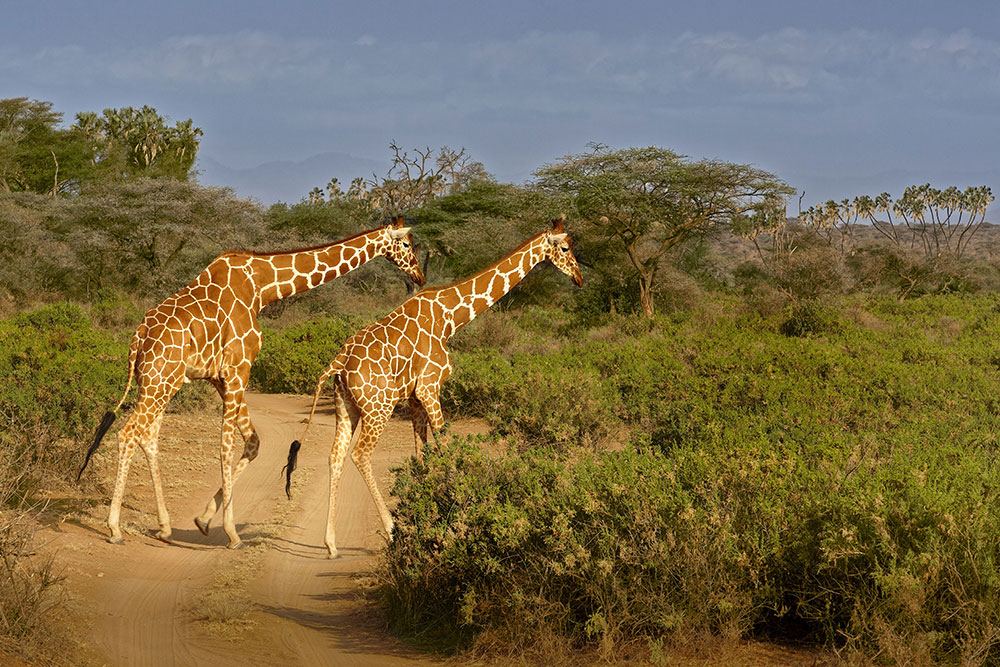
Samburu National Reserve shows you a wilder, quieter side of Kenya. North of Mount Kenya, the green highlands fall away into a very different world. Instead, the land turns hot, dry and dramatic, with red earth, thorny scrub, lonely mountains and doum palms lining a wide, brown river. This is Samburu country, and so it feels like the Africa of old: wild, uncrowded and full of surprises.
The reserve covers around 165 square kilometres on the northern bank of the Ewaso Ng’iro River in Samburu County. Together with Buffalo Springs National Reserve across the river and Shaba National Reserve to the east, it forms one of Kenya’s most rewarding safari areas. Above all, the river is a lifeline in this dry land. It draws elephants, big cats and a remarkable variety of animals to its banks.
Add the vibrant culture of the Samburu people, and you have one of the most distinctive safaris in East Africa.
History of Samburu National Reserve
For centuries, the Samburu people and their neighbours have grazed cattle, goats and camels across this dry land. Traditionally, they move with the seasons in search of water and pasture. The Ewaso Ng’iro, meaning “brown water” in the Maa language, has always been at the centre of life here, for people and wildlife alike.
The area was first protected as part of a larger game reserve in the colonial era. Later, in 1985, Samburu was gazetted as a national reserve under the local county council, now Samburu County Government. In other words, the community’s own local government runs the reserve. Tourism income therefore supports schools, health care and services in the county. Kenya’s national parks, by contrast, are run by the Kenya Wildlife Service.
The region is also closely linked with Joy and George Adamson. Their work raising and releasing Elsa the lioness became famous through the book and film Born Free. Joy Adamson later lived and worked in neighbouring Shaba, which inspired many visitors to discover this corner of Kenya.
In the early 2000s, a young lioness here became world-famous for an extraordinary habit. She adopted baby oryx and protected them instead of hunting them. Local people named her Kamunyak, meaning “the blessed one”. Today, her story still ranks among the most remarkable wildlife stories ever recorded.
Wildlife: the Samburu Special Five
Samburu is famous for the Samburu Special Five. These are the Grevy’s zebra, reticulated giraffe, Beisa oryx, gerenuk and Somali ostrich. Because all of them are adapted to dry country, you will not find them in the Masai Mara or southern Kenya.
- Grevy’s zebra: taller than the common zebra, with narrow stripes and large, rounded ears.
- Reticulated giraffe: marked with a crisp net of white lines over rich brown patches.
- Beisa oryx: a desert antelope with long, straight horns.
- Gerenuk: a slender antelope that stands on its hind legs to browse.
- Somali ostrich: the males have blue-grey necks and legs.
In addition, Samburu offers excellent sightings of elephants, lions and leopards. More than 350 bird species have been recorded here as well. The reserve is also home to one of the world’s longest-running studies of wild elephants, led by Save the Elephants. Indeed, researchers know many of the elephants individually. As a result, their work has transformed our understanding of elephant behaviour and the threats they face.
Things to do in Samburu National Reserve
Game drives
Game drives are the main activity. Morning and afternoon drives take you through Samburu and Buffalo Springs in search of the Special Five, elephants and big cats. Full-day drives with a picnic lunch by the river are also popular.
Elephant watching at the river
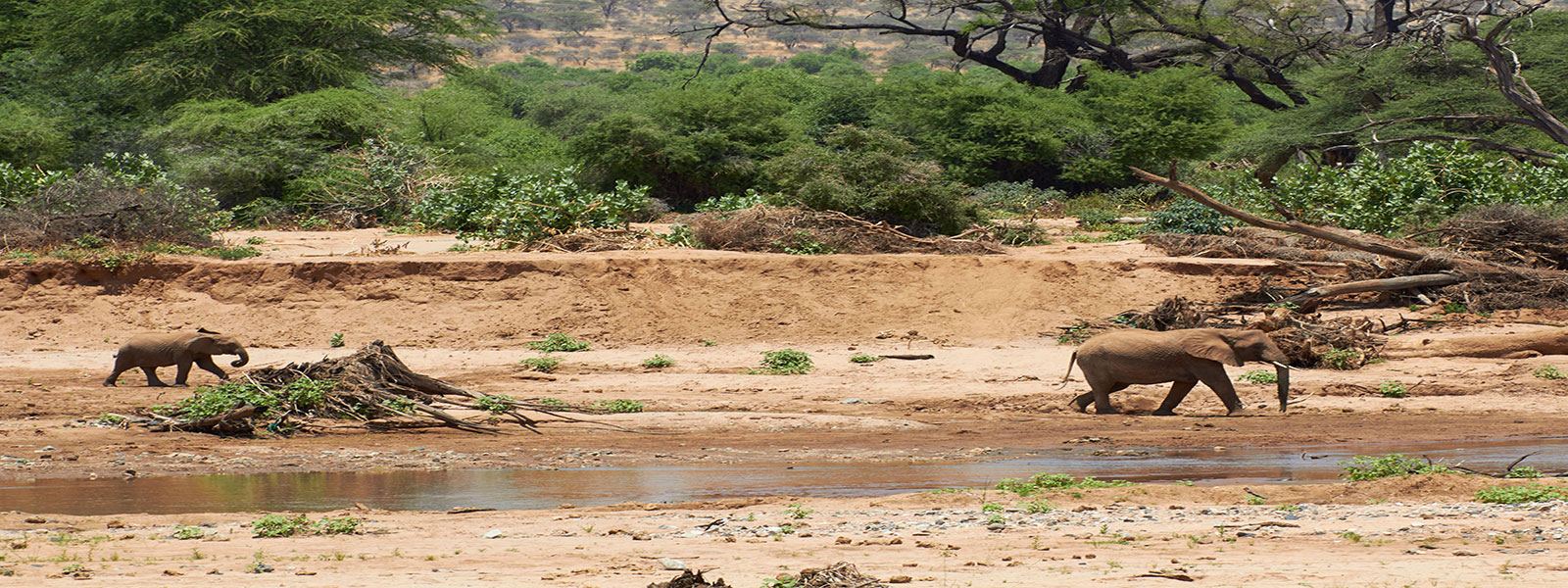
Spend time by the Ewaso Ng’iro around midday. At this hour, herds of elephants come down to drink and cross the river. It is one of the classic sights of Samburu.
Guided walking safaris
In the community conservancies, you can walk with Samburu guides and armed rangers. Along the way, you learn about tracks, plants and traditional uses of the bush.
Samburu cultural visits
The Samburu are close cousins of the Maasai, and they still keep many of their traditions. A village visit introduces you to their homes, their beadwork and their life as herders.
Best time to visit Samburu National Reserve
Samburu is open year-round. Generally, it is hot and dry for most of the year, and the main difference between seasons is rainfall. Because the Ewaso Ng’iro attracts animals all year, game viewing is good in every season. Still, the dry months offer the most reliable sightings.
- June to October (long dry season): the best game viewing, as animals gather along the river. Days are very hot.
- January to February (short dry season): another dry spell, with good wildlife and fewer visitors.
- March to May and November (rains): green scenery and good birding, although some tracks can be muddy.
How to get to Samburu National Reserve
Samburu is about 350 km north of Nairobi. By road, the drive takes around five to six hours on good tarmac via Nanyuki and Isiolo, and you pass Mount Kenya on the way. The main gate, Archer’s Post, is just off the highway north of Isiolo. Many travellers break the journey at Mount Kenya or Ol Pejeta.
Alternatively, daily scheduled flights from Nairobi’s Wilson Airport serve airstrips in and around the reserves. Typically, the flight takes about an hour and a quarter. Flights also connect Samburu with the Masai Mara and other parks, so it is easy to include in a longer safari.
Plan your Samburu safari with Roots
Samburu is a superb add-on to a classic Kenya safari. Our 9 Days Explore Kenya Safari, for example, spends two nights here before moving on to Ol Pejeta, Lake Naivasha and the Maasai Mara. You can also combine it with the rhinos of Lake Nakuru.
To compare more parks, see our guide to Kenya’s national parks and reserves. Then share your dates, and we will send you a free, tailor-made itinerary.
Not sure where to start? Chat with our safari specialists. We’ll help you find the perfect adventure.Every great journey begins with a conversation. Let’s plan yours.
Contact Us
- info@tourwithroots.com
- +256 776 83 1722
- +256 200 905 219
- Universal Apartments, Spine Road - Naalya - Kampala(U)